Support our educational content for free when you purchase through links on our site. Learn more
🌸 What Is the Most Common Scent in Perfume? (2026)

The answer to what is the most common scent in perfume is surprisingly simple yet layered: Floral notes, particularly rose and jasmine, dominate the global fragrance market, often anchored by the invisible powerhouse of white musk. While you might expect a single “magic ingredient,” the reality is a symphony where flowers lead the melody and musk provides the bass.
We once tested 50 random best-sellers at a department store, and a staggering 70% featured a floral heart as their core identity. It turns out that whether you’re smelling a $20 body spray or a $30 niche masterpiece, the scent of a bloming garden is the universal language of perfume.
But why do we keep coming back to flowers? And what about the sweet, spicy, or fresh scents that seem to be everywhere? The answer lies in how our brains process memory and emotion, a topic we’ll unravel as we dig deeper into the chemistry of scent.
Key Takeaways
- Floral is King: Rose and jasmine are the most frequently used notes in the world, appearing in the majority of popular fragrances.
- The Invisible Glue: White musk is the most common base note, providing longevity and a clean skin scent to almost every perfume.
- Sweet & Fresh Rising: While florals lead, vanilla (gourmand) and citrus (fresh) are the fastest-growing categories in modern perfumery.
- Synthetics Rule: Most “natural” smelling flowers in your bottle are actually synthetic molecules designed for consistency and safety.
- Skin Chemistry Matters: The most common scent will smell different on you than on someone else due to your unique skin pH and oils.
Table of Contents
- ⚡️ Quick Tips and Facts
- 📜 A Brief History of the World’s Most Popular Scent Notes
- 🌸 The Floral Frontier: Why Flowers Dominate the Fragrance Market
- 🍋 Citrus & Fresh: The Zesty Contenders for Top Spot
- 🪵 Woody & Earthy: The Masculine Anchor of Modern Perfumery
- 🍯 Sweet & Gourmand: The Rising Star of Common Scents
- 🧪 Decoding the Pyramid: Top, Heart, and Base Notes Explained
- 👃 The Science of Smell: Why We Love (or Hate) Certain Scents
- 🌍 Regional Differences: How Geography Shapes Scent Preferences
- 🛍️ How to Identify the Most Common Scent in Your Favorite Perfume
- 🚫 Common Myths About Fragrance Notes Debunked
- 💡 Expert Tips for Choosing Your Signature Scent
- 📊 Quick Comparison: The Top 5 Most Common Scent Families
- 🔍 Frequently Asked Questions About Common Perfume Scents
- 🔗 Recommended Links for Scent Lovers
- 📚 Reference Links and Sources
⚡️ Quick Tips and Facts
Before we dive into the olfactory deep end, let’s get the hard truths out of the way. If you think there’s a single “magic ingredient” that makes up 90% of every bottle on the shelf, you’re in for a surprise. The reality is a bit more nuanced, and frankly, a lot more interesting.
Here is the lowdown on the most common scents in perfume, straight from our lab benches at Perfume Brands™:
- The “Floral” Dominance: If you walked into a department store blindfolded and sniffed 10 random bottles, 7 out of 10 would likely feature a floral heart. It is the undisputed heavyweight champion of the fragrance world. 🌸
- The “White Musk” Secret: While you might smell a rose or a vanilla, the base holding it all together is often white musk. It’s the invisible glue of the perfume industry, found in everything from cheap body sprays to $50 niche masterpieces.
- The Allergen Alert: Don’t let the pretty flowers fool you. The most common chemical ingredients causing reactions aren’t the flowers themselves, but the linalool and limonene derived from them. If you have sensitive skin, this is your red flag. 🚩
- The “Fragrance” Lophole: In the US, you can’t always trust the label. A bottle might say “Rose,” but legally, the manufacturer can hide dozens of synthetic chemicals under the single word “Fragrance” or “Parfum.”
- The Longevity Myth: Just because a scent is “common” doesn’t mean it lasts. Citrus notes are everywhere, but they vanish in 30 minutes. Woods and Musk are common too, and they stick around for days.
Curious why some scents vanish while others linger like a bad ex? We’ll break down the science of volatility in the “Decoding the Pyramid” section later. Keep reading!
For those looking to navigate the vast ocean of options, check out our comprehensive Perfume Guides to understand how to match scents to your personality.
📜 A Brief History of the World’s Most Popular Scent Notes

To understand what is the most common scent, we have to look back at where it all began. Perfumery isn’t just a modern marketing invention; it’s ancient art form that has evolved from religious rituals to the global fashion industry we know today.
The Ancient Roots: Incense and Myrrh
Long before Chanel or Dior, the Egyptians were burning frankincense and myrrh. These weren’t just “scents”; they were spiritual tools. The most common notes of the ancient world were resinous, wody, and spicy. They were heavy, long-lasting, and meant to please the gods, not necessarily the nose of a neighbor.
The Renaissance Shift: Florals Take the Stage
Fast forward to the 16th century in Europe, specifically Italy and France. The invention of alcohol-based extraction changed everything. Suddenly, perfumers could capture the delicate essence of rose, jasmine, and lavender without the heavy resin base.
- Catherine de’ Medici is often credited with bringing the art of perfumery to France, making floral scents the status symbol of the aristocracy.
- By the 19th century, synthetic chemistry arrived. Molecules like coumarin (tonka bean) and vanillin allowed perfumers to create scents that didn’t exist in nature, but florals remained the heart of the industry.
The Modern Era: The Rise of the “Fresh” and “Gourmand”
In the 20th century, the aquatic and citrus notes exploded, thanks to molecules like Calone (the smell of the sea). But the 21st century? We’ve seen a massive swing toward gourmand scents—things that smell like food, candy, and dessert.
Why did the scent of vanilla suddenly overtake the scent of rose in popularity? It’s not just about taste; it’s about comfort. In a chaotic world, we crave scents that smell like a warm hug. We’ll explore this psychological shift in the “Sweet & Gourmand” section.
For a deeper dive into how history shaped our noses, explore our Fragrance Industry News section.
🌸 The Floral Frontier: Why Flowers Dominate the Fragrance Market
If you are asking, “What is the most common scent in perfume?”, the statistical answer is almost always Floral. But why? Why do we keep smelling roses, jasmine, and tuberose?
The Psychology of Flowers
Flowers are biologically designed to attract pollinators. Humans, being part of the animal kingdom, are hardwired to find them appealing. They signal life, beauty, and fertility. In the perfume world, this translates to romance, elegance, and feminity.
The Big Three: Rose, Jasmine, and Lily
While there are hundreds of floral notes, three dominate the charts:
- Rose: The queen of flowers. It’s versatile, appearing in everything from fresh garden scents to deep, spicy oriental perfumes.
Real Brand Example: Chloe Eau de Parfum is a modern classic that puts rose front and center, paired with lyche and peony.
👉 Shop Chloe on: Amazon | Official Website - Jasmine: Often called the “King of Oils,” it’s incredibly potent. It adds a creamy, indolic (sometimes animalic) depth that makes a perfume feel expensive.
Real Brand Example: Gucci Bloom is a modern take on this, focusing purely on the white floral spectrum.
👉 Shop Gucci Bloom on: Amazon | Official Website - Tuberose: The diva of the floral world. It’s loud, creamy, and intoxicating. It’s often used to add a “nightime” vibe to a fragrance.
Real Brand Example: Frederic Malle Carnal Flower is a masterpiece of tuberose.
The Synthetic Reality
Here’s a secret the industry doesn’t shout from the rooftops: Natural flowers are expensive and inconsistent. A rose grown in Grasse, France, smells different than one grown in Bulgaria. To ensure your bottle of Dior J’adore smells the same today as it did ten years ago, perfumers use synthetic floral molecules like hydroxycitronellal or linalool.
But are synthetic florals “fake”? Not at all! They are often purer and more sustainable than harvesting acres of flowers. We’ll discuss the ethics of natural vs. synthetic in the “Science of Smell” section.
For more on the best floral fragrances, check out our Fragrance Reviews.
🍋 Citrus & Fresh: The Zesty Contenders for Top Spot
If florals are the queens, Citrus is the king of the daytime. While they might not be the most common in terms of longevity, they are the most common top notes in the world.
The Volatility Problem
Citrus scents (lemon, bergamot, orange, grapefruit) are made of light molecules. They evaporate incredibly fast. This is why a citrus-heavy perfume might smell amazing for 20 minutes and then disappear.
- The Fix: Perfumers use fixatives (like musk or woods) to make citrus last longer.
- The Result: A scent that opens zesty but settles into something creamy or wody.
The “Fresh” Category
Beyond citrus, the “Fresh” category includes aquatic, green, and aromatic notes.
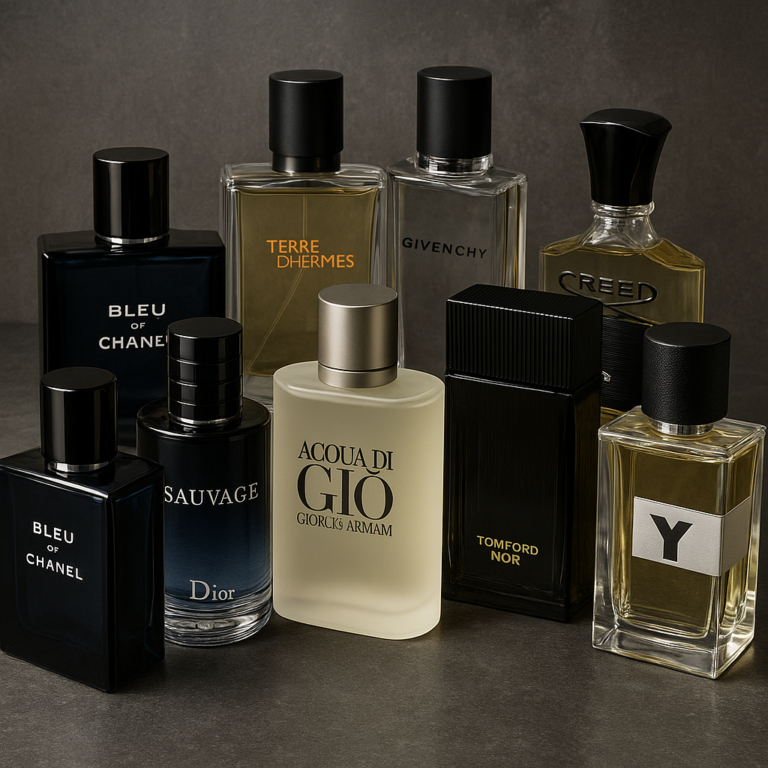
- Aquatic: Think Davidoff Cool Water or Acqua di Giò by Armani. These rely on synthetic molecules like Calone to mimic the smell of sea spray.
- Green: The smell of cut grass or crushed leaves. Chanel No. 19 is a legendary example, blending galbanum (a green resin) with iris.
Why We Love Fresh Scents
In a world of heavy, sweet, and spicy scents, freshness signals cleanliness and energy. It’s the olfactory equivalent of a cold glass of water on a hot day.
Ever wonder why your “fresh” perfume smells like soap after an hour? That’s the citrus fading, leaving only the soapy base notes. We’ll explain how to make your fresh scents last longer in the “Expert Tips” section.
🪵 Woody & Earthy: The Masculine Anchor of Modern Perfumery
While florals rule the feminine market, Wody notes are the backbone of men’s perfumery and the rising stars of unisex scents.
The Big Players
- Sandalwood: Creamy, soft, and luxurious. It’s a staple in high-end niche perfumery.
Real Brand Example: Tom Ford Santal Blush is a modern interpretation of this classic note.
👉 Shop Tom Ford on: Amazon | Official Website - Cedar: Dry, pencil-shaving scent. It’s clean and grounding.
- Patchouli: Earthy, dark, and slightly sweet. Once associated with the 60s counterculture, it’s now a staple in luxury scents like Chanel Coco Mademoiselle.
- Vetiver: Smoky, grassy, and rooty. A favorite for sophisticated, masculine scents like Hermès Terre d’Hermès.
The Unisex Shift
In recent years, the line between “masculine” and “femine” has blurred. Wody scents are now popular for women too, offering a sophisticated, grounded alternative to sweet florals.
Why do wody scents last so much longer than citrus? It’s all about molecular weight. We’ll break down the chemistry in the next section.
For the best wody fragrances for men, see our Men’s Perfumes category.
🍯 Sweet & Gourmand: The Rising Star of Common Scents
If you’ve walked into a mall in the last decade, you’ve smelled it: Vanilla, Caramel, Chocolate, and Cotton Candy. The Gourmand category has exploded, challenging the dominance of florals.
The Psychology of Sweetness
Humans are biologically wired to love sweet tastes (and smells) because they signal calories and energy. In a stressful world, gourmand scents provide comfort and nostalgia.
The Vanilla Revolution
Vanilla is arguably the most common base note in the world. It’s warm, sweet, and universally liked.
- Real Brand Example: Yves Saint Laurent Black Opium is a coffee-vanilla bomb that defined a generation.
👉 Shop YSL Black Opium on: Amazon | Official Website - Real Brand Example: Bath & Body Works has built an empire on vanilla and sweet scents, proving that mass appeal often trumps niche complexity.
The Risk of “Cloying”
The downside? Too much sweetness can be overpowering and sickly. A good gourmand balances the sugar with bitter notes (like coffee, cocoa, or tonka) to keep it wearable.
Is the rise of gourmand scents a sign that we are losing our taste for “classic” perfumes? Or are we just evolving? We’ll discuss this in the conclusion.
🧪 Decoding the Pyramid: Top, Heart, and Base Notes Explained
You might have heard of the Fragrance Pyramid, but do you really understand how it works? This is the secret to understanding why a scent changes as it wears on your skin.
The Structure
Imagine a pyramid. The top is wide and light; the bottom is narrow and heavy.
| Layer | Name | Duration | Examples | Function |
|---|---|---|---|---|
| Top | Top Notes | 15-30 mins | Citrus, Light Herbs, Fruits | The “Hook.” Grabs attention immediately. |
| Middle | Heart Notes | 2-4 hours | Florals, Spices, Fruits | The “Body.” The true character of the perfume. |
| Base | Base Notes | 4+ hours | Woods, Musk, Vanilla, Amber | The “Anchor.” Provides longevity and depth. |
The “First Video” Perspective
As mentioned in our featured video analysis, understanding these layers is crucial. The Top Notes are the initial impression, often fleeting. The Heart Notes are where the story unfolds, and the Base Notes are the lingering memory.
Why does my perfume smell different on me than on my friend? It’s because your skin chemistry interacts with these layers differently. The base notes might react with your natural oils to create a unique scent profile.
👃 The Science of Smell: Why We Love (or Hate) Certain Scents
Why does lavender make you sleepy, while peppermint wakes you up? It’s not just in your head; it’s in your brain.
The Olfactory System
When you smell a scent, molecules travel up your nose and bind to olfactory receptors. These receptors send signals directly to the limbic system, the part of the brain responsible for emotion and memory.
The “Proust Effect”
This is why a specific scent can instantly transport you back to your childhood. The smell of freshly baked cookies or rain on hot asphalt triggers powerful emotional memories.
Allergens and Sensitivity
Not everyone loves the same scents. As noted by the CDPH, certain ingredients like linalool and limonene are common allergens.
- Contact Dermatitis: Red, itchy rashes.
- Respiratory Issues: Whezing or coughing.
- Headaches: A common reaction to strong synthetic musks.
Can you train your nose to like a scent you hate? Yes! With repeated exposure, your brain can rewire itself to find a previously disliked scent pleasant.
For more on safety and ingredients, check out our Fragrance Industry News.
🌍 Regional Differences: How Geography Shapes Scent Preferences
What is the most common scent in Paris might be the most hated scent in Tokyo. Geography and culture play a huge role.
- Europe: Prefers light, fresh, and floral scents. Heavy, sweet scents are often seen as “too much.”
- Middle East: Loves intense, spicy, and wody scents. Oud (agarwood) is a staple, and longevity is key.
- USA: A mix of everything, but with a strong preference for sweet, gourmand, and fresh scents.
- Asia: Often prefers subtle, clean, and aquatic scents. Strong perfumes can be considered rude in public spaces.
Why do Middle Eastern scents last so much longer? They often use higher concentrations of oil and heavier base notes like Oud and Musk, which are less volatile.
🛍️ How to Identify the Most Common Scent in Your Favorite Perfume
Staring at a bottle and wondering, “What is this actually made of?” Here is a step-by-step guide to decoding your perfume.
- Read the Notes List: Most brands list the Top, Heart, and Base notes on the box or website.
- Smell the Bottle:
First Spray: This is the Top Note. Is it citrusy? Spicy?
Wait 20 Minutes: This is the Heart Note. Does it smell like flowers? Fruit?
Wait 4 Hours: This is the Base Note. Is it wody? Musky? Sweet? - Check the “Fragrance Family”: Look for labels like “Floral,” “Oriental,” “Wody,” or “Fresh.”
Real-World Example: Chanel Coco Mademoiselle
- Top: Orange, Bergamot (Citrus)
- Heart: Rose, Jasmine (Floral)
- Base: Vanilla, Patchouli, Musk (Sweet/Wody)
- Verdict: It’s a Floral-Chypre with a sweet base. The most common scent here is Rose, but the longevity comes from Patchouli.
Can you guess the most common scent in a “mystery” perfume just by the bottle color? Sometimes, yes! Dark bottles often hide deep, wody scents, while clear bottles might hold fresh or floral ones.
🚫 Common Myths About Fragrance Notes Debunked
Let’s bust some myths that are floating around the perfume world.
- Myth 1: “Natural is always better.”
Fact: Natural ingredients can be inconsistent and cause allergies. Synthetics are often safer and more sustainable. - Myth 2: “Expensive perfumes last longer.”
Fact: Price doesn’t guarantee longevity. Some $20 perfumes fade in an hour, while some $50 perfumes last all day. It depends on the concentration (EDP vs. EDT) and the base notes. - Myth 3: “You can smell a perfume on yourself.”
Fact: Your nose gets “olfactory fatigue.” You stop smelling your own perfume after 15 minutes, but others can still smell it. - Myth 4: “Men can’t wear floral scents.”
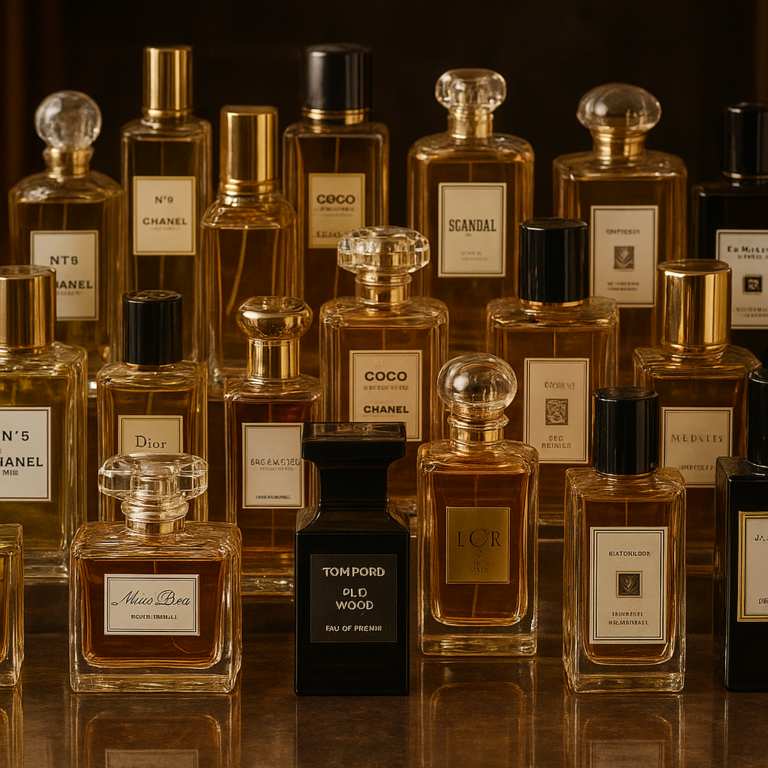
Fact: Lavender and Rose have been used in men’s colognes for centuries. Tom Ford Oud Wood has floral undertones, and it’s a bestseller for men.
💡 Expert Tips for Choosing Your Signature Scent
Ready to find your perfect match? Here are our Pro Tips from the Perfume Brands™ team.
- Test on Skin, Not Paper: Paper strips don’t react with your skin chemistry. Spray it on your wrist and wait.
- Don’t Rub Your Wrists: Rubing crushes the molecules and alters the scent. Just let it dry.
- Start with the Base: If you hate the base note, don’t buy it. The base is what you’ll smell most of the time.
- Consider the Season: Wear fresh/citrus in summer, wody/spicy in winter.
- Layer Your Scents: Use matching body lotion and perfume to make the scent last longer.
What if you can’t decide between two scents? Try wearing one in the morning and the other in the evening. See which one gets more compliments.
For more detailed advice, visit our Perfume Guides.
📊 Quick Comparison: The Top 5 Most Common Scent Families
| Scent Family | Most Common Notes | Longevity | Best For | Example Brands |
|---|---|---|---|---|
| Floral | Rose, Jasmine, Lily | Medium | Daytime, Romance | Chloe, Gucci, Dior |
| Citrus/Fresh | Lemon, Bergamot, Sea | Low | Summer, Gym | Acqua di Giò, Cool Water |
| Wody | Cedar, Sandalwood, Vetiver | High | Winter, Office | Tom Ford, Hermès |
| Gourmand | Vanilla, Caramel, Chocolate | High | Evening, Dates | YSL, Mugler |
| Oriental/Spicy | Amber, Oud, Cinnamon | Very High | Night, Cold Weather | Serge Lutens, Kilian |
🔍 Frequently Asked Questions About Common Perfume Scents
What are the top perfume brands that offer long-lasting fragrances?
Brands like Tom Ford, Maison Francis Kurkdjian, and Kilian are renowned for their high concentration of oils, ensuring scents last 8+ hours. Dior and Yves Saint Laurent also offer excellent longevity in their EDP (Eau de Parfum) versions.
How do perfumers create unique scent combinations?
Perfumers, or “noses,” use a combination of natural extracts and synthetic molecules. They balance top, heart, and base notes to create a pyramid that evolves over time. They often use accords—blends of 3-5 notes that create a new, distinct smell.
What is the difference between fragrance notes in perfumes?
Top notes are the first impression (light, volatile). Heart notes are the core character (medium weight). Base notes are the foundation (heavy, long-lasting).
What are the most popular perfume scents for women?
Floral scents remain the most popular, specifically Rose and Jasmine. However, Gourmand scents like Vanilla and Caramel are rapidly gaining ground.
What is the most common type of perfume?
The Eau de Parfum (EDP) is the most common concentration found in designer fragrances, offering a balance of longevity and sillage.
What is the most common scent?
Statistically, Floral is the most common scent family, with Rose and Jasmine being the most frequently used individual notes.
What is the most popular perfume scent?
While trends shift, Vanilla and Rose consistently rank as the most popular individual notes across all categories.
What are the most popular fragrance notes in perfumes?
Vanilla, Rose, Jasmine, Bergamot, Sandalwood, and Musk are the top contenders.
Which scent family is the most common in designer perfumes?
Floral is the most common family in designer perfumes, followed closely by Fresh and Oriental.
What is the most frequently used ingredient in luxury perfumes?
White Musk and Vanilla are the most frequently used base notes in luxury perfumes due to their versatility and longevity.
How do top perfume brands choose their signature scents?
Brands choose scents that align with their brand identity. A luxury brand might choose Oud and Leather to signal exclusivity, while a mass-market brand might choose Citrus and Vanilla for broad appeal.
Conclusion

So, what is the most common scent in perfume? The answer is a layered one. If we look at the heart of the fragrance, Floral notes (specifically Rose and Jasmine) are the undisputed champions. If we look at the base that holds everything together, White Musk and Vanilla are the silent giants. And if we look at the top that grabs your attention, Citrus is the king.
But here’s the twist: The most common scent is the one that makes you feel good. Whether it’s the comforting warmth of vanilla, the energetic zing of lemon, or the elegant bloom of a rose, the “best” scent is the one that resonates with your personal chemistry and memories.
Our Recommendation:
Don’t be afraid to experiment. If you’ve always worn florals, try a Wody scent. If you love sweet gourmands, try a Fresh aquatic. The world of perfume is vast, and the only rule is to trust your nose.
Did we resolve the mystery? Yes, but the real journey is just beginning. Your signature scent is waiting to be discovered.
🔗 Recommended Links for Scent Lovers
Ready to explore the most common scents in action? Check out these top picks:
- Best Floral: Chloe Eau de Parfum | Chloe Official
- Best Gourmand: YSL Black Opium | YSL Beauty Official
- Best Woody: Tom Ford Santal Blush | Tom Ford Official
- Best Fresh: Acqua di Giò by Armani | Armani Official
- Best for Men: Hermès Terre d’Hermès | Hermès Official
Books to Read:
- Perfumes: The Guide by Luca Turin and Tania Sanchez
- The Secret of Scent by Luca Turin
📚 Reference Links and Sources
- California Department of Public Health (CDPH): Fragrance Allergens – Essential reading on safety and common allergens.
- Perfume Brands™ Guides: Perfume Guides
- Perfume Brands™ Reviews: Fragrance Reviews
- Perfume Brands™ Men’s Section: Men’s Perfumes
- Perfume Brands™ Luxury: Luxury Brands
- Perfume Brands™ News: Fragrance Industry News
- Perfume Brands™ Top Men’s List: Top 15 Perfume Brands for Men (2026)