Support our educational content for free when you purchase through links on our site. Learn more
Perfume Industry Analysis (2026): What’s Behind the Scent? 🌿


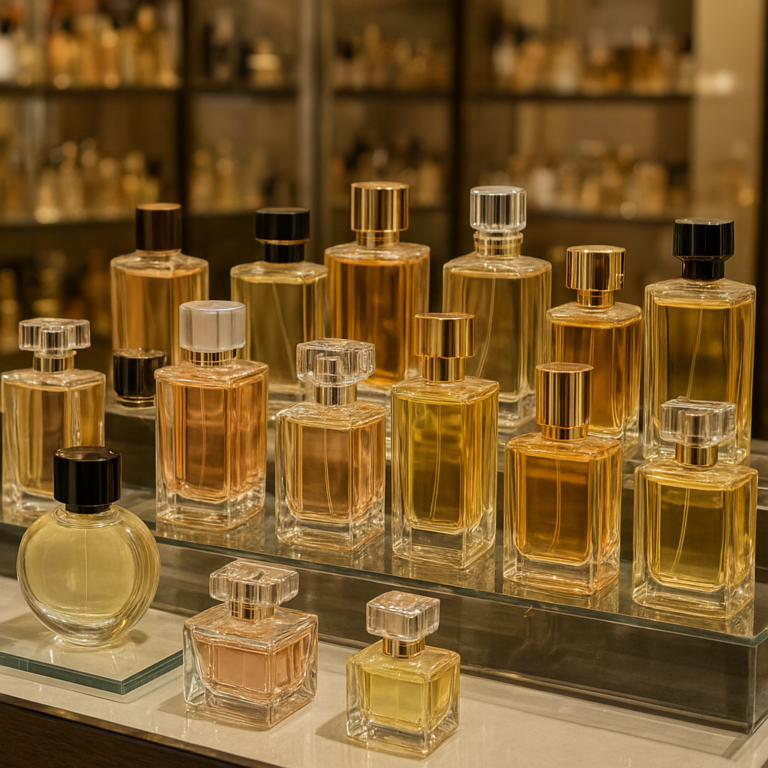
Perfume industry analysis shows a large, evolving global market powered by premium fragrance, online discovery, and consumers’ appetite for personal expression. But headline market forecasts are only part of the story: the industry’s performance also depends on how well brands balance compelling scents, trusted sourcing, smart distribution, and repeat customers.
One market estimate puts global perfume revenue at USD 50.45 billion in 2024, with a forecast of USD 77.52 billion by 2030. Estimates vary according to what each report counts, so we look beyond the biggest number to the business forces—and consumer habits—shaping the fragrance market.
We’ve seen the same thing at the scent strip: a shopper arrives asking for the fragrance everyone online is talking about, then falls for something completely different after the dry-down. That little plot twist captures the industry neatly: marketing can spark discovery, but the scent has to earn the sale.
Key Takeaways
- The perfume market is substantial and projected to grow, though estimates differ by report scope and methodology.
- Premiumization, social media, e-commerce, and fragrance discovery are influencing how consumers find and buy perfume.
- Regional preferences and retail habits vary; successful brands adapt rather than assume one launch fits every market.
- Quality, brand storytelling, sampling, and repeat purchase matter more to lasting success than launch buzz alone.
- Sustainability and compliance are core business considerations, from ingredient sourcing to refillable packaging and substantiated environmental claims.
- Perfume is a connected industry, bringing together perfumers, fragrance houses, suppliers, manufacturers, brands, retailers, and consumers.
Table of Contents
- ⚡️ Quick Tips and Facts
- 🔎 What Is the Perfume Industry?
- Perfume, fragrance, and scent: key terms explained
- How the fragrance value chain works
- 🏛️ Perfume Industry History: From Ancient Scents to Modern Luxury
- The rise of fine fragrance and designer perfume
- How celebrity and niche perfumery reshaped the market
- 📊 Perfume Market Size, Growth, and Forecast
- Global perfume market revenue and growth outlook
- What market reports include—and why estimates differ
- How to evaluate fragrance market data and sources
- 🌍 Regional Perfume Market Analysis
- North America: prestige fragrance and online growth
- Europe: heritage houses and fragrance innovation
- Asia-Pacific: rising demand and local scent preferences
- Middle East, Latin America, and emerging markets
- 🧴 Perfume Market Segmentation
- By product type: eau de parfum, eau de toilette, and more
- By fragrance family and scent profile
- By price tier: mass, prestige, luxury, and niche
- By consumer group, occasion, and gender positioning
- By sales channel: department stores, specialty retail, and e-commerce
- 🚀 What’s Driving Perfume Industry Growth?
- Premiumization and fragrance as an affordable luxury
- Social media, influencers, and fragrance discovery
- Niche perfumery, layering, and personal expression
- Travel retail, gifting, and seasonal demand
- ⚠️ Market Challenges and Business Risks
- Counterfeit perfume and brand protection
- Ingredient sourcing, regulation, and reformulation
- Economic pressure, competition, and changing consumer habits
- ♻️ Sustainability in the Fragrance Industry
- Natural, synthetic, and responsibly sourced ingredients
- Refillable perfume bottles and circular packaging
- Environmental claims, transparency, and greenwashing
- 🧪 Fragrance Innovation, Ingredients, and Technology
- The role of fragrance houses and perfumers
- AI, consumer data, and scent development
- New formats: discovery sets, solid perfume, and functional fragrance
- 🏆 Competitive Landscape: Leading Perfume Brands and Companies
- Luxury and designer fragrance players
- Niche perfume houses and independent brands
- Major fragrance manufacturers and suppliers
- How brands compete: launches, licensing, and storytelling
- 🛍️ Perfume Consumer Trends and Buying Behavior
- How shoppers discover and choose a fragrance
- Online perfume shopping, reviews, and sampling
- What fragrance buyers value: longevity, identity, and ingredients
- 💼 Starting or Growing a Perfume Business
- How to develop a fragrance brand and product line
- Manufacturing, packaging, and distribution basics
- Marketing perfume in a crowded market
- Key performance indicators for fragrance businesses
- 🔮 Perfume Industry Outlook: What Comes Next?
- Emerging fragrance trends to watch
- Oportunities for brands, retailers, and investors
- ✅ Conclusion
- 🔗 Recommended Links
- ❓ FAQ
- How large is the global perfume market?
- Which region has the fastest-growing perfume market?
- What is the difference between perfume and fragrance?
- What are the biggest trends in the perfume industry?
- Is the perfume industry growing?
- How can a new perfume brand enter the market?
- 📚 Reference Links
⚡️ Quick Tips and Facts
- Perfume is both an art form and a global business: its market includes finished fragrances, brand licensing, fragrance development, ingredients, packaging, and retail.
- A frequently cited market estimate from Grand View Research places the global perfume market at USD 50.45 billion in 2024, with a forecast of USD 77.52 billion by 2030 and a projected 7.5% CAGR for 2025–2030. Treat those figures as one research firm’s estimate, not a universal accounting total.
- Market-size figures vary because reports define “perfume” differently: some focus on fine fragrance, while others include broader fragrance products or use different geographic and retail-sales assumptions.
- The industry sells more than juice in a pretty bottle. It connects perfumers, fragrance houses, ingredient growers, manufacturers, licensors, retailers, and consumers.
- Online discovery is growing, but scent testing still matters. Sampling, discovery sets, store testers, and returns policies help close the “I can’t smell this through my phone” gap.
- Premium and niche fragrances are gaining attention, but affordable products remain essential to the market. A viral bottle is not automatically a sustainable business.
- Curious about the names used for fragrance companies? Our guide explains what perfume brands are called. For broader market reporting and fragrance developments, visit Fragrance Industry News.
| At a glance | What it means |
|---|---|
| Market-size estimate | Grand View Research reports USD 50.45 billion globally for 2024 |
| Forecast in that report | USD 77.52 billion by 2030; 7.5% CAGR for 2025–2030 |
| Core consumer promise | A wearable scent tied to pleasure, identity, memory, and occasion |
| Key business levers | Brand strength, scent quality, distribution, repeat buying, and storytelling |
| Important caveat | Market estimates differ by product definition, channel coverage, and methodology |
🔎 What Is the Perfume Industry?
The perfume industry is the business of creating, producing, marketing, and selling fragrance products. Its best-known output is fine fragrance, but the commercial ecosystem also includes raw materials, aroma chemicals, glass bottles, packaging, licensing, testing, and retail.
It is a wonderfully odd business: a perfumer may spend months refining a formula, while a consumer decides in seconds whether a scent feels like them. Behind that quick emotional reaction sits a complicated supply chain and a lot of technical work.
Perfume, fragrance, and scent: key terms explained
In everyday conversation, “perfume” and “fragrance” often mean the same thing. In business and regulation, the terms can be broader or more specific. Concentration labels such as eau de parfum and eau de toilette are useful shopping shorthand, but they do not guarantee a precise strength or wear time across every brand.
| Term | Common meaning | What consumers should know |
|---|---|---|
| Perfume / fine fragrance | A scented product worn on the body, often alcohol-based | Usage varies by market; “perfume” can also mean the whole category |
| Parfum / extrait | Often used for a higher-concentration fragrance format | Concentration ranges are not fully standardized across brands |
| Eau de parfum (EDP) | A common fine-fragrance format | Often richer than a brand’s EDT version, but formula and skin chemistry matter |
| Eau de toilette (EDT) | A common format that may feel lighter or fresher | It is not automatically short-lived; ingredients and construction matter |
| Fragrance house | A company that develops scents for brands and other clients | Often works behind the scenes and may not own the consumer-facing label |
| Niche perfume | A market label commonly associated with specialist or smaller houses | “Niche” has no single, universally binding definition |
The International Fragrance Association (IFRA) publishes standards and safety guidance for fragrance ingredients. For a broader regulatory overview of cosmetic labeling in the United States, see the U.S. Food and Drug Administration’s cosmetics guidance.
How the fragrance value chain works
A finished perfume is the result of many partners and decisions, not just a perfumer and a bottle.
| Stage | What happens | Typical participants |
|---|---|---|
| 1. Brief and concept | The brand defines the customer, mood, market position, and product goals | Brand teams, marketers, perfumers |
| 2. Formula development | A perfumer and fragrance house translate the concept into a scent | Perfumers, evaluators, fragrance houses |
| 3. Ingredient sourcing | Natural materials and aroma chemicals are selected and assessed | Growers, extractors, chemical suppliers |
| 4. Testing and compliance | The formula and finished product are assessed for suitability and market requirements | Manufacturers, safety and regulatory teams |
| 5. Packaging and production | Juice, bottle, pump, cap, carton, and labeling are assembled | Contract manufacturers, packaging suppliers |
| 6. Launch and distribution | The product reaches stores, e-commerce platforms, and duty-free outlets | Brand owners, retailers, distributors |
| 7. Discovery and repeat purchase | Sampling and customer experience influence conversion and loyalty | Retailers, brands, consumers |
Our perfumers often describe the brief as the fragrance’s “north star.” If it is vague, the project can wander. If it is too rigid, the scent may feel like a checklist with a spray nozzle.
🏛️ Perfume Industry History: From Ancient Scents to Modern Luxury

Fragrance has been used for ritual, personal adornment, medicine, trade, and pleasure for millennia. The modern perfume business grew through advances in extraction and chemistry, the development of luxury houses, and the rise of global retail.
The rise of fine fragrance and designer perfume
European perfume centers such as Grasse became closely associated with cultivation and fragrance production. France remains an important symbol of perfumery, but modern fragrance creation and sales are international: ingredients, expertise, manufacturing, brand ownership, and consumers cross borders.
The historic link between Grasse and fragrance is more than a charming postcard. Local expertise in flowers and extraction helped build a wider industry, while later advances in chemistry expanded the perfumer’s palette beyond what nature alone could supply. The UNESCO description of the skills related to perfume in Pays de Grasse documents the region’s cultural heritage.
How celebrity and niche perfumery reshaped the market
Designer and celebrity fragrances introduced fashion and entertainment audiences to scent through familiar names and accessible storytelling. Niche houses, meanwhile, helped turn fragrance collecting into a hobby built around unusual materials, distinctive concepts, and personal discovery.
Neither lane is automatically “better.” Designer releases can offer strong distribution and polished execution; independent houses may take more unusual creative risks. For shoppers comparing those styles, browse our Luxury Brands and Niche Perfumes collections.
📊 Perfume Market Size, Growth, and Forecast
Market-size estimates are useful for understanding broad direction, but they are not a crystal ball—or a single agreed-upon tally. Researchers may define the category differently, include different channels, or estimate sales using different methods.
Global perfume market revenue and growth outlook
Grand View Research estimates that the global perfume market was worth USD 50.45 billion in 2024 and could reach USD 77.52 billion by 2030, representing a 7.5% CAGR from 2025 to 2030.
The report links growth to interest in premium fragrances, personal expression, online access, and product innovation. Its estimate is a useful reference point, but it should be read alongside other sources and the scope notes in each report.
| Measure | Grand View Research estimate | How to interpret it |
|---|---|---|
| Global market value, 2024 | USD 50.45 billion | A modeled estimate based on the report’s market definition |
| Forecast value, 2030 | USD 77.52 billion | A projection, not a guaranteed outcome |
| Forecast CAGR, 2025–2030 | 7.5% | Annualized growth over the stated forecast period |
A video perspective linked as the first YouTube video focuses on France’s fragrance heritage, Grasse, and Givaudan’s role in the global flavor-and-fragrance business. It also cites an earlier market forecast of USD 52.7 billion in 2018 and USD 72.3 billion by 2024. That is a historical forecast from a different source and period, not a directly comparable update to Grand View Research’s 2024 estimate. The gap is a reminder to check the year, category definition, and methodology before comparing headline numbers.
What market reports include—and why estimates differ
Two credible reports can publish different totals without either being fraudulent or useless. Their estimates may diverge because they:
- Define perfume, fragrance, and fine fragrance differently.
- Count manufacturer revenue, retail sales, or both.
- Include or exclude gift sets, travel retail, online marketplaces, and related products.
- Use different exchange rates, forecast periods, and assumptions about inflation or consumer demand.
- Publish different research dates, meaning the underlying economic conditions may not match.
The competing Data Bridge Market Research perfume page and Fortune Business Insights perfume page were unavailable for detailed verification in the supplied summaries. Data Bridge displayed the access message, “You are unable to access databridgemarketresearch.com.” Since the underlying analysis was not accessible, we do not treat that message as market evidence or invent figures from it.
How to evaluate fragrance market data and sources
Before quoting a market figure in a business plan or article, check:
- The category definition: Does “perfume” mean fine fragrance alone, or a wider fragrance market?
- The base year: Is the reported figure historical, estimated, or forecast?
- The sales basis: Does it refer to retail sales, wholesale value, or manufacturer revenue?
- The geography: Is it truly global, or does it exclude certain markets?
- The report date: Older forecasts should not be presented as current market facts.
- The source’s methodology: Look for scope notes, segmentation, and stated assumptions.
A useful rule from our industry reading: compare like with like, and label forecasts as forecasts. It saves a surprising number of arguments in boardrooms—and comment sections.
🌍 Regional Perfume Market Analysis
Regional demand is shaped by purchasing power, climate, gifting customs, retail access, local fragrance preferences, and regulation. A scent that feels light and effortless in one market may read as barely-there in another.
| Region | Market characteristics to watch | Retail and product considerations |
|---|---|---|
| North America | Strong prestige beauty retail, direct-to-consumer brands, and social discovery | Sampling, online reviews, and brand recognition influence purchase |
| Europe | Heritage houses, established fragrance culture, and mature specialty retail | Brand history and perfumery credentials can carry weight |
| Asia-Pacific | Diverse, fast-evolving markets and expanding online access | Preferences vary by country, age group, climate, and use occasion |
| Middle East and Africa | Strong scent traditions in some markets, alongside varied consumer segments | Intensity, layering, gifting, and local distribution need market-specific research |
| Latin America | Fragrance plays a meaningful role in personal-care routines and gifting | Availability, local pricing structures, and channel reach matter |
North America: prestige fragrance and online growth
North American shoppers encounter fragrance through department stores, beauty specialty chains, brand boutiques, and e-commerce. Social platforms can accelerate interest in a scent, but retail testing remains important: online descriptions cannot fully convey a perfume’s texture, projection, or dry-down.
Brands selling online benefit from clear product descriptions, dependable sampling options, and realistic guidance about wear. Overpromising “all-day” performance can win a click and lose a customer.
Europe: heritage houses and fragrance innovation
Europe combines historic fragrance centers, luxury fashion houses, specialist retailers, and a sophisticated consumer base. Heritage is a meaningful asset, but it is not a substitute for a good formula. Shoppers still ask the same question we do at the bloter: Does the scent make me want to smell it again?
Regulatory compliance is another key part of doing business in the region. Brands should follow applicable cosmetics requirements and ingredient restrictions, supported by current guidance from bodies such as IFRA and the European Commission’s cosmetics policy pages.
Asia-Pacific: rising demand and local scent preferences
Asia-Pacific is not one fragrance market with one preferred scent. Consumer tastes, retail infrastructure, beauty habits, and preferred formats vary widely across countries and cities. A successful brand studies local expectations instead of assuming that an international bestseller will translate unchanged.
Market entry may involve:
- Local-language product information and customer support.
- Reliable online and offline distribution.
- Appropriate discovery formats and gifting options.
- Research into climate, cultural context, and local shopping habits.
- Compliance with each market’s product and labeling requirements.
Middle East, Latin America, and emerging markets
The Middle East includes consumers with deep fragrance traditions, as well as a broad mix of modern niche, designer, and international tastes. In parts of the region, layering and richer scent profiles are visible in retail offerings, but brands should avoid reducing an entire region to one fragrance stereotype.
Latin American markets also differ country by country. Distribution, consumer access, local retail partnerships, and economic conditions can matter as much as the scent itself. Good regional strategy starts with listening, not shipping the same launch campaign everywhere and hoping the map does the marketing.
🧴 Perfume Market Segmentation
Market segmentation helps explain why a market can grow in several directions at once. One shopper wants a fresh everyday EDT; another collects concentrated extrait; a third is looking for a gift with a recognizable designer name.
By product type: eau de parfum, eau de toilette, and more
| Format | Typical consumer expectation | Important caveat |
|---|---|---|
| Parfum / extrait | A concentrated, often rich format | Concentration and wear vary by brand and formula |
| Eau de parfum | A versatile, often fuller-bodied option | Label alone cannot predict projection or longevity |
| Eau de toilette | Often associated with a lighter or fresher feel | Some EDTs perform impressively; others are deliberately subtle |
| Eau de cologne | Often used for a light, fresh style | The term may be used differently across products |
| Other formats | Body mists, solid fragrances, oils, and discovery products | Their use cases and scent behavior differ from alcohol-based sprays |
The concentration label is a starting point, not a performance guarantee. If longevity matters, test the specific perfume on skin and assess it after several hours.
By fragrance family and scent profile
Fragrance families are useful for browsing and describing a scent, though brands and retailers do not always classify perfumes identically.
- Floral: Rose, jasmine, orange blossom, and other flower-inspired notes.
- Citrus: Bergamot, lemon, grapefruit, and bright citrus effects.
- Wody: Cedar, sandalwood, vetiver, and dry or creamy wood impressions.
- Amber: Warm, resinous, balsamic, or sweet facets; terminology varies across the industry.
- Fresh and aromatic: Green, herbal, aquatic, or airy profiles.
- Gourmand: Edible-inspired notes such as vanilla, cocoa, coffee, or caramel.
Most perfumes are more like a blended chord than a single-note solo. A floral fragrance might have citrus sparkle at the opening, a rose heart, and a woody base. Explore our Fragrance Reviews for individual examples.
By price tier: mass, prestige, luxury, and niche
Price tier reflects brand positioning, distribution, packaging, marketing, and product choices. It does not provide a simple quality ranking. A carefully made accessible fragrance can be more enjoyable than a prestige release that simply does not suit your taste.
| Segment | Common strengths | Common trade-offs |
|---|---|---|
| Mass-market | Broad availability, accessible formats, recognizable styles | Less exclusivity; launch choices may focus on mainstream appeal |
| Prestige | Brand storytelling, polished presentation, wide beauty-retail access | Marketing and packaging can contribute substantially to perceived value |
| Luxury | Heritage, materials, service, and elevated brand experience | Higher positioning does not guarantee personal preference |
| Niche / independent | Distinctive concepts and specialist identity | Availability and sampling can be more limited |
Browse Luxury Brands and Niche Perfumes to compare the different approaches.
By consumer group, occasion, and gender positioning
Brands may position fragrance for men, women, or all genders, but scent preferences are personal, not a rulebook. “Men’s” and “women’s” categories are retail conventions; anyone can wear any perfume they enjoy.
Use case often matters more than label:
- Work or close quarters: Consider a softer scent with restrained projection.
- Evening or events: A richer profile may suit the setting, though moderation is still charming.
- Warm weather: Many people prefer lighter citrus, aromatic, or airy styles.
- Cold weather: Woods, spice, and amber-like notes can feel especially cozy.
- Travel: Discovery sprays and compact formats reduce commitment and packing fuss.
For a curated browse, see Men’s Perfumes.
By sales channel: department stores, specialty retail, and e-commerce
Offline retail gives customers access to testers, staff recommendations, and immediate purchase. Online retail offers convenience, broad assortment, and access to reviews—but leaves shoppers guessing about the actual smell.
| Channel | Consumer advantage | Brand challenge |
|---|---|---|
| Department stores | Sampling and service across multiple brands | Competition for attention and shelf space |
| Specialty beauty retail | Fragrance expertise and curated selection | Requires staff training and a compelling in-store experience |
| Brand boutiques | Immersive brand storytelling | Limited reach compared with broad retail networks |
| E-commerce | Convenience, product depth, and discovery through search | Scent cannot be tested directly before purchase |
| Travel retail | Access to travelers and gifting occasions | Sales depend on travel flows and store placement |
🚀 What’s Driving Perfume Industry Growth?
The growth story is not one magic ingredient. It is a blend of premiumization, digital discovery, creative differentiation, gifting, and consumers using scent as a small but powerful daily ritual.
Premiumization and fragrance as an affordable luxury
A perfume can function as an accessible taste of luxury: a beautiful object, a familiar brand, and a sensory experience without buying an entire wardrobe. Grand View Research highlights premiumization among the factors influencing fragrance demand in its market analysis.
But premiumization has a limit. Consumers may trade up for a scent that feels distinctive and well made, then trade down if the brand’s story outruns the product. In our experience, the best premium pitch is still a perfume that smells memorable on skin.
Social media, influencers, and fragrance discovery
Short-form video and creator reviews can introduce shoppers to a fragrance they might never have found in a department store. They are excellent discovery tools, but a creator’s skin, climate, application habits, and scent preferences may differ from yours.
Use online opinions as clues, not verdicts:
- Look for several reviewers describing the scent independently.
- Pay attention to recurring notes and performance comments.
- Check whether the review is sponsored or affiliate-linked.
- Sample before buying a full bottle when possible.
- Revisit your impression after the fragrance has dried down.
A “viral” perfume may be a wonderful fit. It may also be the scent equivalent of trying on someone else’s favorite sweater: lovely, but not quite yours.
Niche perfumery, layering, and personal expression
Niche perfumery has helped put unusual scent concepts and independent brand identities in the spotlight. Meanwhile, fragrance layering lets consumers combine products to create a more individual effect.
Layering tip: start with one spray of each scent, applied separately or to different areas. Test at home before wearing the combination out. Some perfumes harmonize beautifully; others behave like two talented soloists fighting over the microphone.
Grand View Research describes fragrance as a form of “self-expression” and points to personalization as a market influence. That is a useful way to understand why consumers seek more than a pleasant smell: they want a scent that feels like a choice about who they are.
Travel retail, gifting, and seasonal demand
Perfume is a popular gift because it feels personal and celebratory. That same intimacy makes it a risky blind buy. Discovery sets, smaller formats, gift cards, and exchange-friendly retail policies can make fragrance gifting less like scent roulette.
Seasonal launches and travel retail also help brands connect products to occasions. For shoppers, the practical advice is simple: gift a scent the recipient already wears, or give them the fun of choosing it themselves.
⚠️ Market Challenges and Business Risks
The fragrance business is attractive, but launching a bottle is not the same as building a durable brand. Competition is fierce, distribution is expensive, and a scent must earn repeat wear—not just an unboxing video.
Counterfeit perfume and brand protection
Counterfeits can damage brand trust and create product-quality or safety concerns. Consumers should favor authorized retailers, inspect packaging and seller information, and be cautious of listings that seem implausible.
The OECD’s work on trade in counterfeit goods outlines the broader economic and consumer harms associated with counterfeiting. For brand owners, protection can involve marketplace monitoring, authentication features, supplier controls, and clear customer guidance.
Ingredient sourcing, regulation, and reformulation
Fragrance formulas must balance creative intent, ingredient availability, cost, stability, and the rules of the markets where products are sold. Some materials may be restricted or subject to usage limits, and supply can shift due to harvest conditions, geopolitical events, or changes in production.
Brands should maintain current safety and compliance processes rather than rely on old formulas or informal assumptions. Consult IFRA standards and applicable government guidance, including the FDA cosmetics labeling guide for U.S. requirements.
Economic pressure, competition, and changing consumer habits
Consumers can love perfume and still become more selective about what they buy. A crowded launch calendar also makes it harder for any single scent to hold attention.
Common business pressures include:
- High competition for retail shelf space and digital visibility.
- Dependence on hero products that may eventually lose momentum.
- Rising expectations for sampling, service, and fast delivery.
- Consumer scrutiny of brand claims and product performance.
- The cost and complexity of maintaining broad international distribution.
A balanced portfolio can help, but only if each product has a clear role. Ten near-identical flankers do not necessarily create ten reasons to buy.
♻️ Sustainability in the Fragrance Industry
Sustainability has moved from a side conversation to a product-development and sourcing concern. Consumers may ask where ingredients come from, how packaging is made, and whether a bottle can be refilled or recycled.
Natural, synthetic, and responsibly sourced ingredients
“Natural” does not automatically mean safer or more sustainable, just as “synthetic” does not automatically mean harsh or environmentally harmful. Each ingredient needs to be considered in context: sourcing, cultivation, manufacturing, safety, and impact all matter.
Synthetic materials can also reduce pressure on scarce natural resources and provide consistent quality. Natural materials can contribute richness and complexity, but responsible sourcing and traceability matter. The International Fragrance Association offers industry standards and resources related to fragrance ingredient safety.
Refillable perfume bottles and circular packaging
Refill systems can reduce the need for a completely new primary container when customers actually use them. The practical details matter: a refill must be available, easy to handle, compatible with the bottle, and clearly explained.
For shoppers, check:
- Is the perfume bottle designed for refilling?
- Is the refill format easy to purchase and use?
- Can the packaging components be separated for recycling?
- Does the brand provide clear instructions for disposal?
Packaging claims should be specific. “Refillable” is most useful when the brand explains how and where to refill.
Environmental claims, transparency, and greenwashing
Sustainability language can be vague. Look for measurable details, clear definitions, and evidence rather than broad labels such as “eco-friendly.” The U.S. Federal Trade Commission’s Green Guides explain how environmental marketing claims should be substantiated in the United States.
For fragrance shoppers, good questions include: What exactly is recycled? Is an ingredient traceable? Is a refill program available? Has the brand explained the limits of its claim? A straight answer is more valuable than a leaf graphic doing interpretive dance.
🧪 Fragrance Innovation, Ingredients, and Technology
Perfumery is often described as art, and rightly so—but it also relies on chemistry, evaluation, measurement, and years of trained sensory judgment. Innovation usually works best when technology supports the nose rather than pretending to replace it.
The role of fragrance houses and perfumers
A fragrance house may create formulas for multiple brands, while a perfumer develops the scent in response to a brief. The process typically involves repeated trials, evaluation, and adjustments to balance ingredients, cost, stability, and desired character.
The featured video discusses the craft through the example of Givaudan and the fragrance heritage of France. One quote captures the starting point neatly: “Everything starts with a purpose. Either you have an idea on your own, or you have a brief from a customer.” That purpose might be a mood, a material, a target audience, or a brand story.
AI, consumer data, and scent development
Data tools can help teams study market patterns, organize consumer feedback, and explore possible formula directions. They cannot turn a scent description into an unquestionable creative answer.
The video summary offers a useful perspective: “We actually are investing into digital technologies to make better fragrances and flavors, not necessarily replacing our magic noses with artificial intelligence.” That distinction matters. Technology can make the process more informed; the final sensory judgment still depends on trained people and real-world testing.
New formats: discovery sets, solid perfume, and functional fragrance
New formats help brands reach consumers who want portability, lower-commitment sampling, or different application experiences.
- Discovery sets: Useful for comparing multiple scents before committing to one.
- Travel sprays: Convenient for bags and trips, subject to airline liquid rules.
- Solid perfumes: Compact and discreet, though their texture and scent behavior differ from sprays.
- Body mists: Often designed for a lighter, more casual application.
- Layering products: Designed to complement or extend a brand’s fragrance wardrobe.
Always check what a product format is designed to do. A solid perfume is not a failed spray; it is a different tool in the scent kit.
🏆 Competitive Landscape: Leading Perfume Brands and Companies
The market combines household-name luxury houses, beauty groups, specialist fragrance labels, and fragrance manufacturers that often work behind the scenes. Grand View Research names companies including LVMH, Chanel, Coty, Estée Lauder Companies, L’Oréal, Puig, Shiseido, Hermès, Kering, and Inter Parfums in its competitive landscape.
Luxury and designer fragrance players
Luxury and designer houses compete through brand heritage, design, retail presence, creative direction, and recognizability. The fragrance may be one part of a wider fashion or beauty identity, which can help a brand reach loyal shoppers—but also raises the bar for consistency.
Explore our Luxury Brands and Fragrance Reviews for consumer-facing examples.
Niche perfume houses and independent brands
Niche and independent brands can build a following through distinctive storytelling, a focused product range, unusual scent profiles, and strong community engagement. The trade-off may be narrower distribution or fewer opportunities to sample in person.
For shoppers, a niche label is best evaluated on the same basics as any other perfume: Do you enjoy the scent? Does it suit the occasion? Does the brand explain the product clearly? Browse Niche Perfumes.
Major fragrance manufacturers and suppliers
Behind many consumer brands are fragrance houses and ingredient suppliers that develop scents, source materials, and support product creation. Givaudan is one example highlighted in the featured video. These businesses can influence the industry through technical expertise, ingredient portfolios, and work with brand clients.
Their visibility to consumers is often low, but their role is substantial: the company on the bottle and the company that created the fragrance are not always the same.
How brands compete: launches, licensing, and storytelling
Brands compete through more than formulas. They also make choices about:
- Product launches: New scents, flankers, flankers of flankers—and the occasional launch that genuinely changes the conversation.
- Licensing: A brand may grant another company rights to develop or distribute fragrances.
- Marketing and creative direction: Campaigns shape how consumers imagine the perfume before smelling it.
- Retail placement: Visibility and sampling can affect discovery.
- Customer retention: Replenishment, loyalty programs, and brand extensions can encourage repeat purchases.
Strong storytelling gets someone to try a scent. The scent itself has to give them a reason to return.
🛍️ Perfume Consumer Trends and Buying Behavior
Buying behavior spans quick impulse purchases, careful sampling, collecting, gifting, and replenishment. The route to a bottle may begin with a friend’s recommendation, a store tester, an online review, or a note the shopper cannot stop thinking about.
How shoppers discover and choose a fragrance
A practical way to evaluate a perfume is to give it time:
- Start with a bloter to understand the opening without wearing several scents on your skin.
- Choose one or two favorites rather than spraying every tester in the shop.
- Try the fragrance on skin and wait for the first impression to soften.
- Check the dry-down later because the scent can change over time.
- Wear it in your normal routine before deciding whether it deserves a full bottle.
Consumer reviews can help identify repeated patterns, but individual experience varies. A fragrance may feel long-lasting one person and quiet on another. See our Fragrance Reviews for scent-specific perspectives.
Online perfume shopping, reviews, and sampling
Online shopping offers broad choice, but fragrance is a sensory product. Good online retailers help compensate with sample options, clear notes, return information, and trustworthy seller details.
When reading user reviews, separate useful observations from universal claims:
- Useful: “The citrus opening is bright, then becomes woody on me.”
- Less useful: “This lasts exactly 14 hours on everyone.”
- Useful: “I found it subtle in a warm office.”
- Less useful: “All floral perfumes smell like soap.”
Check whether a review reflects the same format, batch, and product version. Flankers and reformulations can smell different, even when the bottle looks familiar.
What fragrance buyers value: longevity, identity, and ingredients
Consumers often care about longevity and projection, but these are not the only measures of a good perfume. Personal fit, comfort, versatility, ingredient transparency, packaging, and brand trust also matter.
A lighter scent can be excellent if the wearer wants a discreet office fragrance. A powerful fragrance can be a delight outdoors and overwhelming in a small room. Performance is not a contest to see who can scent the elevator first.
💼 Starting or Growing a Perfume Business
Building a fragrance business means turning a creative concept into a compliant, producible, discoverable product. The bottle may be the visible part; the planning underneath is what makes the launch viable.
How to develop a fragrance brand and product line
A useful development sequence:
- Define the customer and use case. Who is the scent for, and when might they wear it?
- Choose a clear brand position. Identify what makes the brand different without relying on vague claims.
- Write a focused creative brief. Include mood, market context, scent direction, and practical requirements.
- Work with qualified fragrance partners. Discuss formula development, testing, compliance, and ownership terms.
- Test with real consumers. Collect structured feedback on scent, packaging, and use—not only whether people like the founder’s story.
- Plan samples and distribution. Fragrance needs discovery opportunities, especially for a new name.
- Prepare for repeat buying. A launch is the start of a customer relationship, not the finish line.
Manufacturing, packaging, and distribution basics
The operational checklist can include formula supply, stability assessment, component sourcing, manufacturing capacity, labeling, shipping, retailer requirements, and product documentation. These details should be planned early; a beautiful concept can stall if a bottle component is unavailable or the label needs revision.
| Business area | Questions to resolve |
|---|---|
| Formula and supply | Who owns the formula? Can supply scale consistently? |
| Safety and compliance | Which markets will the product enter, and what rules apply? |
| Packaging | Are components compatible, available, and clearly labeled? |
| Manufacturing | What are the quality controls, lead times, and production capabilities? |
| Distribution | Which retailers, distributors, or direct channels fit the target customer? |
| Customer discovery | How will shoppers smell the product before purchase? |
For regulatory starting points, consult IFRA, the FDA cosmetics guidance, and the relevant authorities in every target market.
Marketing perfume in a crowded market
Good fragrance marketing makes a scent easier to imagine without pretending language can replace smelling it. Use clear descriptions, specific note references, honest performance expectations, and sampling.
Effective tactics may include:
- Discovery sets and sample-led campaigns.
- Educator or creator partnerships with clear disclosures.
- Retail events and guided scent consultations.
- Search-friendly product pages with accurate notes and format details.
- Customer feedback that helps improve descriptions and service.
The best story gives the shopper a reason to explore. It should not promise that wearing the perfume will turn a Tuesday into a royal wedding.
Key performance indicators for fragrance businesses
Track a combination of financial, operational, and customer measures rather than relying on social impressions alone.
| KPI | What it helps assess |
|---|---|
| Sample-to-full-size conversion | Whether discovery leads to purchase |
| Repeat-purchase rate | Whether customers return after trying the product |
| Return and complaint patterns | Whether expectations match the actual product |
| Sell-through by channel | How effectively inventory moves through retail |
| Customer acquisition cost | What it takes to gain a new buyer |
| Stock availability | Whether customers can buy the product when they want it |
| Review themes | What consumers consistently notice about scent and service |
Pair numbers with customer language. A conversion rate tells you what happened; reviews may explain why.
🔮 Perfume Industry Outlook: What Comes Next?
The industry’s next chapter is likely to be shaped by more personalized discovery, smarter digital tools, sustainability scrutiny, and competition for consumer attention. The exact pace will differ by region and segment.
Emerging fragrance trends to watch
- Personalization: Consumers seek scents that feel distinctive and suited to their identity.
- Sampling-first shopping: Discovery sets and smaller formats help reduce blind-buy uncertainty.
- Refill and packaging innovation: Refill systems gain traction when they are practical and easy to access.
- Digital discovery: Reviews and social content keep influencing what shoppers try.
- Ingredient transparency: Consumers increasingly ask what a fragrance contains and how claims are supported.
- Flexible fragrance wardrobes: More shoppers may choose different scents for different settings rather than one signature scent for every occasion.
Grand View Research identifies personalization, e-commerce, premium products, and natural or sustainable ingredients among trends influencing the market. Each is an opportunity, but none guarantees success on its own.
Oportunities for brands, retailers, and investors
Oportunities exist across product development, discovery, retail service, and supply-chain improvement. The strongest prospects are usually specific: solving a sampling problem, serving an underepresented customer, improving refill access, or building a distinctive scent portfolio.
For brands, differentiation must be tangible. For retailers, it may mean better education and discovery. For suppliers, it may involve traceable materials or new technical capabilities. For investors, assess repeat demand and operational resilience—not only launch buzz.
The question we opened with was whether the perfume industry is simply selling bottles. It is not. It sells sensory experiences through a network of creative, scientific, manufacturing, and retail expertise—and its most durable brands connect all of those pieces without making the customer do the detective work.