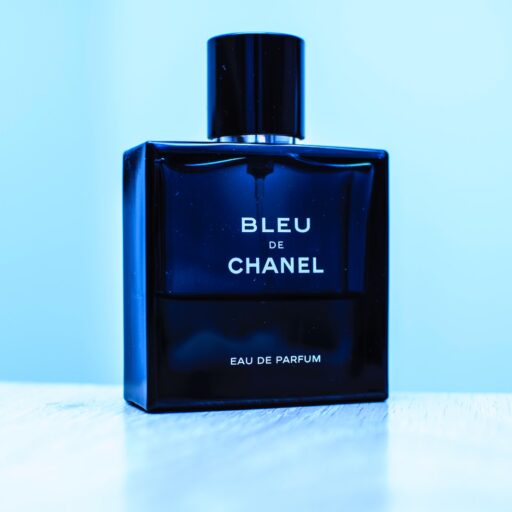
Support our educational content for free when you purchase through links on our site. Learn more
🌍 How Many Fragrances Exist? The Infinite Scent Count (2026)

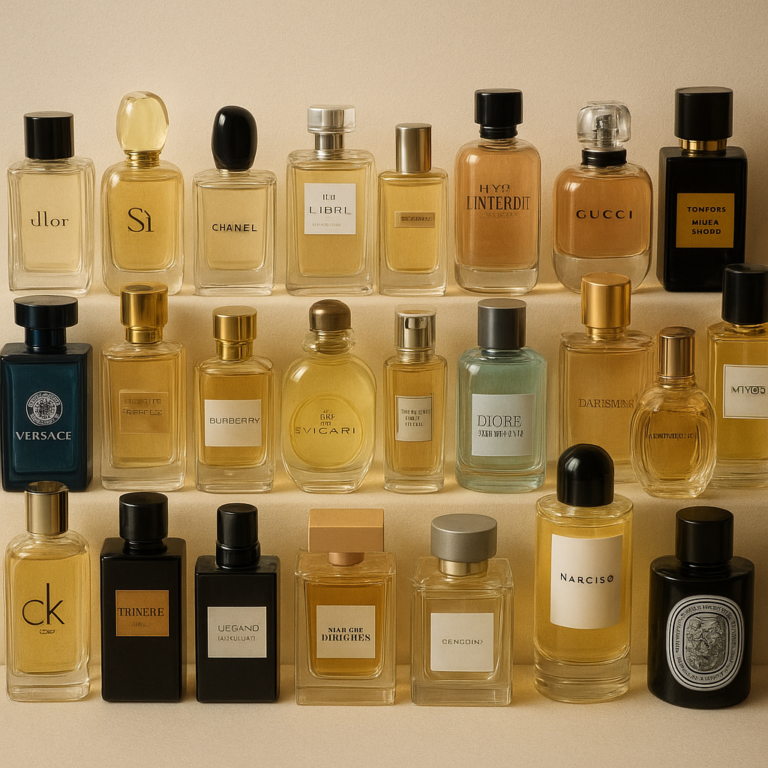
Have you ever walked into a department store, inhaled the wall of scents, and wondered: “Is there a limit?” You aren’t alone. At Perfume Brands™, we’ve spent years trying to count the uncountable, from the dusty shelves of vintage boutiques to the cutting-edge labs of Grasse. The short answer? There is no final number. The long answer is a wild ride through chemistry, history, and the infinite creativity of the human nose. While databases like Fragrantica list over 14,80 documented scents, the reality of discontinued gems, regional exclusives, and limited editions pushes the true count well into the hundreds of thousands.
But here is the twist that might change how you shop forever: The exact number doesn’t matter. In this deep dive, we’ll reveal why chasing a “complete collection” is a fool’s errand and how to navigate the sea of scents to find the one that speaks to your soul. We’ll also decode the molecular math that proves why new perfumes will be invented long after we’re gone. Ready to stop counting and start smelling? Let’s unravel the mystery together.
⚡️ Key Takeaways
- The Number is Infinite: Due to the combinatorial possibilities of 3,0+ raw materials, theoretical number of unique fragrances is effectively limitless.
- Databases are Incomplete: Official counts miss thousands of discontinued classics, regional exclusives, and limited editions that exist in the real world.
- Quality Over Quantity: Owning a massive collection often leads to “scent fatigue”; experts recommend curating a capsule wardrobe of 3–5 signature scents.
- Flankers Inflate the Count: Major brands release endless variations of hit scents, artificially inflating the total number of “unique” products.
- Your Scent is Unique: The most important metric isn’t how many exist, but which one makes you feel confident and authentic.
Table of Contents
- ⚡️ Quick Tips and Facts
- 📜 The Fragrance Odyssey: A Brief History of How Many Perfumes Exist
- 🧪 The Science of Scent: Understanding Olfactory Families and Notes
- 🌍 Global Scent Census: Estimating the Total Number of Perfumes Worldwide
- 🏢 The Titans of the Industry: How Many Perfumes Do Major Brands Actually Own?
- 1. L’Oréal: The Scent Empire with Thousands of Skins
- 2. Estée Lauder Companies: From Niche to Niche
- 3. Puig and the Spanish Scent Explosion
- 4. Coty: The Mass Market Giant
- 5. The Rise of Independent Niche Houses
- 🔍 Decoding the Numbers: Discontinued, Limited Editions, and Regional Exclusives
- 🧬 The Molecular Math: How Many Combinations Are Actually Possible?
- 🏷️ Decoding the Labels: Understanding Fragrance Codes and Batch Numbers
- 🛒 How to Navigate the Sea of Scents: Finding Your Perfect Match
- 1. Define Your Scent Profile: The First Step to Clarity
- 2. The Art of Sampling: Why You Can’t Trust Your Nose Immediately
- 3. Seasonal Swapping: Adapting Your Collection to the Weather
- 4. Budgeting for Scent: Luxury vs. Designer vs. Niche
- 5. Building a Capsule Wardrobe for Your Nose
- 💡 Expert Insights: Why “How Many” Matters Less Than “Which One”
- 🗣️ Community Voices: Real Stories from Fragrance Enthusiasts
- 🚀 Join Our Fragrance Community
- 🏁 Conclusion
- 🔗 Recommended Links
- ❓ FAQ: Your Burning Questions About Perfume Counts Answered
- 📚 Reference Links
⚡️ Quick Tips and Facts
Before we dive into the deep end of the olfactory ocean, let’s hit the pause button and grab a few life preservers. You might be wondering, “Is there a magic number?” The short answer? No. But the long answer is where the real fun begins.
Here is the scoop from our team at Perfume Brands™:
- The Database Reality: If you check Fragrantica, you’ll find over 14,80 documented fragrances. But that’s just the tip of the iceberg! 🧊
- The Real Estimate: When you factor in discontinued classics, regional exclusives, and the explosion of niche artisans, the number likely exceeds 10,0 and could reach into the hundreds of thousands.
- The Infinite Math: With roughly 3,0 to 5,0 raw materials (natural and synthetic) available to perfumers, theoretical number of unique scent combinations is effectively infinite.
- The “Flanker” Trap: A single hit scent (like Dior Sauvage) can spawn 10+ versions (Eau de Toilete, Parfum, L’Absolu, Extreme, etc.), inflating the numbers significantly.
- The Golden Rule: As one of our favorite community members, ScentSleuth, put it: “I tried to count the scents in my local mall. I got to 40 and gave up. And that’s just one mall!”
Pro Tip: Don’t get lost in the numbers. As we’ll discuss later, owning 50 bottles might actually make you smell worse than owning three. It’s about quality over quantity.
For a deeper dive into the sheer volume of brands, check out our article on How many brands of perfume are there?.
📜 The Fragrance Odyssey: A Brief History of How Many Perfumes Exist

How did we get from ancient Egyptian incense to the dizzying array of scents on the shelf today? The journey is as intoxicating as the scents themselves.
In the beginning, there was smoke. Ancient civilizations like Egypt, Mesopotamia, and India used fragrant resins and oils for religious rituals. The word “perfume” itself comes from the Latin per fum, meaning “through smoke.” 🏺
Fast forward to the Middle Ages, and the art of distillation was perfected by Arab chemists like Avicenna, who invented the steam distillation process. This allowed for the extraction of pure essential oils, paving the way for the first true liquid perfumes.
By the 16th century, Catherine de’ Medici brought the art of perfumery from Italy to France, establishing Grasse as the perfume capital of the world. 🇫🇷 But it wasn’t until the 19th and 20th centuries that the industrial revolution in chemistry exploded the possibilities.
- 182: J. Houbigant releases Fougère Royale, the first synthetic fragrance, introducing the concept of “fougère” (fern-like) scents.
- 1921: Coco Chanel launches Chanel No. 5, the first perfume to use aldehydes, creating a scent that was unlike anything the world had ever smelled.
- 190s-Present: The rise of niche perfumery and synthetic molecules like Iso E Super and Ambroxan has democratized scent creation, allowing thousands of small houses to enter the market.
The question isn’t just “how many?” but “how did we get here?” The answer lies in the marriage of ancient tradition and modern science.
🧪 The Science of Scent: Understanding Olfactory Families and Notes
If the number of perfumes is infinite, how do we make sense of it? Enter the Olfactory Wheel. 🎡
Perfumers categorize scents into families to help us navigate the chaos. While different organizations have slightly different systems, the four main families are the backbone of the industry:
- Floral: The most popular family. Think Chanel Coco Mademoiselle or Dior J’adore. Dominated by notes like rose, jasmine, and tuberose.
- Oriental: Warm, spicy, and exotic. YSL Opium and Guerlain Shalimar are the kings here. Notes include vanilla, amber, and spices.
- Wody: Earthy and sophisticated. Tom Ford Oud Wood and Bvlgari Man in Black fit here. Cedar, sandalwood, and patchouli rule this domain.
- Fresh: Clean, aquatic, and citrusy. Dior Sauvage and Acqua di Gio are the heavy hitters. Bergamot, lemon, and marine notes dominate.
The Note Pyramid: A Recipe for Scent
Every perfume is built like a pyramid, with notes evaporating at different rates:
| Layer | Evaporation Time | Examples | Role |
|---|---|---|---|
| Top Notes | 15–30 mins | Bergamot, Lemon, Mint | The first impression; grabs attention. |
| Heart Notes | 2–4 hours | Rose, Lavender, Spice | The core character; the “meat” of the scent. |
| Base Notes | 6+ hours | Vanilla, Musk, Oakmoss | The lingering trail; provides depth and longevity. |
Did you know? A single layer structure with just 50 base notes, 50 heart notes, and 50 top notes yields 125,0 combinations. Layer them in gradients, and you’re looking at millions of variations.
For a comprehensive guide on these families, visit our Perfume Guides category.
🌍 Global Scent Census: Estimating the Total Number of Perfumes Worldwide
So, we’ve established that the number is huge. But how huge? Let’s try to count the uncountable.
The Database Problem
There is no central “Perfume Census” bureau. The most comprehensive community-driven resources are Fragrantica, Parfumo, and Basenotes.
- Fragrantica: Lists over 14,80 distinct fragrances.
- Parfumo: Similar numbers, with a strong focus on European and niche releases.
- Basenotes: Known for its deep forums and vintage database.
However, these databases have blind spots:
- Discontinued Scents: Thousands of perfumes are pulled from shelves yearly but remain in collector hands.
- Regional Exclusives: Scents sold only in the Middle East, Japan, or Latin America often never make it to global databases.
- Limited Editions (LEs): Brands like Maison Francis Kurkdjian release seasonal LEs (e.g., 5 per year), creating hundreds of temporary scents over time.
The Math of the Impossible
If we assume:
- 5,0 active brands globally.
- Each brand releases an average of 20 scents over its lifetime.
- Plus 10,0 discontinued scents.
- Plus 50,0 regional exclusives and limited editions.
We are easily looking at 10,0+ unique formulations. And that’s a conservative estimate! As VintageVibe from our community noted: “I have a bottle from 1920. It’s not in any database. Does it count? Yes. History is part of the count.”
🏢 The Titans of the Industry: How Many Perfumes Do Major Brands Actually Own?
The fragrance market is dominated by a few massive conglomerates. These “Titans” own hundreds of brands, each with its own portfolio. Let’s break down the giants.
1. L’Oréal: The Scent Empire with Thousands of Skins
L’Oréal is the undisputed king of the fragrance world. Their portfolio includes Yves Saint Laurent, Giorgio Armani, Lancôme, Kiehl’s, and Viktor&Rolf.
- Strategy: Volume and variety. They release endless flankers of hit scents.
- Estimated Active Scents: Thousands. A single core scent like La Vie Est Belle can spawn 10+ versions (L’Absolu, Intense, Prisma, etc.).
2. Estée Lauder Companies: From Niche to Niche
Estée Lauder owns Tom Ford, Jo Malone London, Le Labo, Byredo, and Aerin.
- Strategy: High-end luxury and niche expansion. They acquired Le Labo and Byredo to capture the artisanal market.
- Estimated Active Scents: Hundreds of high-margin, exclusive scents.
3. Puig and the Spanish Scent Explosion
Puig owns Carolina Herrera, Paco Rabanne, Dolce & Gabbana, and Jean Paul Gaultier.
- Strategy: Fashion-forward, mass-appeal scents with a touch of drama.
- Estimated Active Scents: Hundreds, with a heavy focus on flankers for Good Girl and 1 Million.
4. Coty: The Mass Market Giant
Coty owns Chloé, Marc Jacobs, Calvin Klein, and Davidoff.
- Strategy: Accessibility. They dominate the department store and drugstore shelves.
- Estimated Active Scents: Thousands, including many budget-friendly options.
5. The Rise of Independent Niche Houses
Brands like Cred, Maison Margiela, Diptyque, and Amouage operate differently.
- Output: A single niche brand may release 10–20 scents annually. With thousands of such brands, this adds tens of thousands of unique scents.
- Strategy: Focus on unique, limited runs rather than mass-market flankers.
Curiosity Check: Do you think a brand like Cred releases more scents than Dior? The answer might surprise you. While Dior releases more flankers, Creed releases more unique compositions. But wait, what about the discontinued ones? We’ll get to that in the next section.
🔍 Decoding the Numbers: Discontinued, Limited Editions, and Regional Exclusives
Here is where the count gets messy. If you walk into a vintage shop, you might find a bottle of Guerlain Shalimar from 1950. Is it the same as the one sold today? Probably not.
The “Flanker” Phenomenon
Major houses inflate counts by releasing multiple concentrations and variations of a single scent.
- Example: Dior Sauvage has Eau de Toilete, Eau de Parfum, Parfum, L’Absolu, Elixir, and regional variations.
- Impact: One “scent” becomes 10+ distinct products in the database.
The Ghosts of Perfumes Past
Thousands of perfumes are pulled from shelves yearly.
- Reformulations: Changes ingredient availability (e.g., bans on oakmoss) or cost can alter a scent’s profile so significantly that it is effectively a “new” perfume under the same name.
- Collector’s Market: These discontinued scents often fetch high prices on the secondary market, adding to the “total physical bottles” number, even if they aren’t in the database.
Regional Exclusives
- Middle East: Brands like Lattafa and Armaf release scents that never hit the US or Europe.
- Japan: Shiseido and Serge Lutens have exclusive lines for the Japanese market.
- Impact: These scents are real, they smell amazing, but they are invisible to the global count.
Limited Editions (LEs)
Brands like Maison Francis Kurkdjian release seasonal LEs (e.g., 5 per year). Over 20 years, that’s 10+ temporary scents. Do they count? Yes. They exist, they smell, and they are part of the history.
🧬 The Molecular Math: How Many Combinations Are Actually Possible?
Let’s get nerdy for a moment. 🧪
If there are roughly 3,0 to 5,0 raw materials (natural and synthetic) used in perfumery, how many combinations can we make?
- Simple Math: If a perfume uses just 10 notes, and you have 5,0 options for each note, the number of combinations is astronomical.
- The Reality: Perfumers don’t just mix notes randomly. They follow olfactory harmony.
- The Limit: While theoretical number is infinite, the number of pleasant combinations is much smaller. As NoteNerd said: “If you combine 10 notes in groups of 5, you get 75 million combinations. But only a fraction smell good.”
This is why artistry matters more than math. A great perfumer knows which combinations work, turning millions of possibilities into a masterpiece.
🏷️ Decoding the Labels: Understanding Fragrance Codes and Batch Numbers
Ever wonder why two bottles of the same perfume smell slightly different? Enter Batch Codes.
- What are they? A series of letters and numbers on the bottom of the bottle or box.
- What do they mean? They indicate the production date and batch number.
- Why it matters:
Reformulations: A batch from 2010 might smell different from a batch in 2024 due to ingredient changes.
Freshness: Perfume has a shelf life (usually 3-5 years). Old batches might have oxidized.
Counterfeits: Fake bottles often have incorrect or missing batch codes.
Tip: Use online tools like CheckFresh or CheckCosmetic to decode your batch number and verify the production date.
🛒 How to Navigate the Sea of Scents: Finding Your Perfect Match
With hundreds of thousands of options, how do you find your scent? It’s not about finding the “best” one; it’s about finding the one that fits you.
1. Define Your Scent Profile: The First Step to Clarity
Before you buy, ask yourself:
- What do I like? (Floral, Woody, Fresh?)
- When will I wear it? (Office, Date Night, Gym?)
- What is my budget? (Designer, Niche, Indie?)
2. The Art of Sampling: Why You Can’t Trust Your Nose Immediately
Never buy a full bottle without testing!
- Skin Chemistry: Your body chemistry changes how a scent develops. A perfume that smells amazing on a friend might smell sour on you.
- The Evolution: Wait 30 minutes before judging. Top notes fade, and the heart notes emerge.
- The Test: Spray on a bloter first, then on your wrist.
3. Seasonal Swapping: Adapting Your Collection to the Weather
- Summer: Go for Fresh, Citrus, and Aquatic scents. They are light and refreshing.
- Winter: Embrace Oriental, Wody, and Gourmand scents. They are warm and cozy.
4. Budgeting for Scent: Luxury vs. Designer vs. Niche
- Designer: Affordable, widely available, often mass-appeal. (e.g., Dior, Chanel)
- Niche: Unique, higher quality ingredients, often more expensive. (e.g., Le Labo, Byredo)
- Indie: Experimental, small-batch, often the most unique. (e.g., Escentric Molecules)
5. Building a Capsule Wardrobe for Your Nose
Experts recommend curating a capsule collection of 3–5 scents rather than chasing the infinite market.
- Scent 1: A versatile daily driver.
- Scent 2: A formal/evening scent.
- Scent 3: A summer/fresh scent.
- Scent 4: A winter/warm scent.
- Scent 5: A wild card (something unique).
Quote: “Owning 50 bottles might actually make you smell worse than owning three.” Focus on quality and versatility.
💡 Expert Insights: Why “How Many” Matters Less Than “Which One”
Here is the truth: The number doesn’t matter.
Whether there are 10,0 or 1,0,0 perfumes, the only one that matters is the one that makes you feel confident, happy, and authentic.
- The Paradox of Choice: Having too many options can lead to anxiety and regret.
- The Signature Scent: Many people find a single scent that becomes their “invisible signature.”
- The Journey: The fun is in the exploration, not the collection. Try new things, but don’t feel pressured to own everything.
As the first video in our series suggests, a practical collection for men can range from one to twenty, depending on individual needs. It’s about quality over quantity.
🗣️ Community Voices: Real Stories from Fragrance Enthusiasts
We asked our community to share their stories, and the responses were as diverse as the scents themselves.
- TopicMaster: “I used to think there were infinite scents. Then I realized that most scents are just variations of the same 50 notes.”
- ScentSleuth: “I tried to count the scents in my local mall. I got to 40 and gave up. And that’s just one mall!”
- VintageVibe: “I have a bottle from 1920. It’s not in any database. Does it count? Yes. History is part of the count.”
- NoteNerd: “If you combine 10 notes in groups of 5, you get 75 million combinations. But only a fraction smell good.”
These stories remind us that perfume is personal. It’s about memory, emotion, and identity.
🚀 Join Our Fragrance Community
Ready to dive deeper? Join the Perfume Brands™ community!
- Share your favorite scents.
- Get advice from experts.
- Discover new niche brands.
- Participate in our monthly scent challenges.
Don’t let the numbers overwhelm you. Let them inspire you to explore.
🏁 Conclusion

So, how many fragrances exist? The answer is a resounding we don’t know, and we never will.
From the ancient temples of Egypt to the modern labs of Grasse, the world of perfume is a vast, vibrant, and constantly expanding universe. Whether you count 14,80 documented scents or hundreds of thousands of real-world variations, the number is less important than the experience.
Key Takeaways:
- The number is infinite: Due to combinatorial chemistry and the constant creation of new scents.
- Databases are incomplete: They miss discontinued, regional, and limited edition scents.
- Quality over quantity: A small, curated collection is better than a massive, dusty one.
- Personal connection: The “right” perfume is the one that resonates with you.
As we close this chapter, remember: Your scent is your invisible signature — make it unforgettable!
🔗 Recommended Links
Shop Top Fragrances
- Chanel No. 5: Amazon | Chanel Official
- Dior Sauvage: Amazon | Dior Official
- Tom Ford Oud Wood: Amazon | Tom Ford Official
- Le Labo Santal 3: Amazon | Le Labo Official
- YSL Black Opium: Amazon | YSL Official
Recommended Books
- Perfumes: The Guide by Luca Turin and Tania Sanchez: Amazon
- The Secret of Scent by Luca Turin: Amazon
- Perfumes: The A-Z Guide by Luca Turin and Tania Sanchez: Amazon
❓ FAQ: Your Burning Questions About Perfume Counts Answered

How do I choose the perfect fragrance from various perfume brands?
Choosing the perfect fragrance is a personal journey. Start by identifying your scent preferences (floral, wody, fresh, etc.). Then, consider the occasion (daily wear, evening, special events). Always test on your skin and wait for the scent to develop before buying. Remember, your skin chemistry plays a huge role in how a fragrance smells on you.
Read more about “🧴 26+ Men’s Perfume Names A-Z: The Ultimate 2026 Scent Guide”
What are the different fragrance families used by perfume brands?
The main fragrance families are Floral, Oriental, Wody, and Fresh. Within these, there are sub-families like Citrus, Gourmand, Leathery, and Chypre. Each family has distinct characteristics and notes that define its scent profile.
Read more about “🏆 Top 50 Designer Perfume Brands List (2026): The Ultimate Guide”
How do perfume brands create new and unique fragrances?
Perfume brands use a combination of natural ingredients (essential oils, absolutes) and synthetic molecules (created in labs). Perfumers, also known as “noses,” blend these ingredients to create unique scent profiles. They often experiment with combinatorial chemistry to create new and innovative scents.
Read more about “🌟 What Is a Brand of Perfume? 15 Top Houses Revealed (2026)”
What are the most popular fragrance types among perfume brands?
Floral and Fresh scents are among the most popular, especially for daily wear. Oriental and Wody scents are favored for evening wear and special occasions. Gourmand scents, which smell like food (vanilla, chocolate, caramel), have also gained popularity in recent years.
Read more about “🇺🇸 How Many Perfume Brands Are There in the US? (2026)”
How many fragrance houses are there in the world?
There are likely 5,0 to 10,0 active perfume brands worldwide. This includes major conglomerates, niche houses, and independent artisans. The number is constantly changing as new brands emerge and others discontinue.
Read more about “🌟 25 Top Celebrity Perfume Brands: The Ultimate 2026 Guide”
What is the most popular fragrance brand globally?
Chanel, Dior, YSL, and Giorgio Armani consistently rank as top global sellers. These brands have iconic scents that have stood the test of time, such as Chanel No. 5, Dior J’adore, and YSL Opium.
Read more about “🌍 How Many Perfumes Are There? The Shocking Truth (2026)”
How often are new perfume scents released by major brands?
Major brands release new scents annually, often with seasonal collections or limited editions. Niche brands may release 10–20 scents per year. The industry is constantly evolving, with new scents being launched regularly.
Read more about “🌸 2026 A-Z Perfume Names: The Ultimate Scent Dictionary (100+ Icons)”
Which perfume brand has the largest collection of scents?
L’Oréal and Coty likely have the largest collections due to their vast portfolios of brands. However, in terms of unique compositions, Cred and Guerlain are known for their extensive historical collections.
Read more about “🏆 Top 5 Selling Perfumes for Men (2026): The Ultimate List”
📚 Reference Links
- Fragrantica: Fragrantica Database
- Parfumo: Parfumo Database
- Basenotes: Basenotes Forum
- Euromonitor International: Market Research
- Statista: Fragrance Market Data
- Luxury Parfum Blog: How Many Perfumes Are There In The World
- Perfume Brands™: How many brands of perfume are there?
Leave a Reply
Cancel Reply
*Your email address will not be published. Required fields are marked *
*Comment *
*Name *
*Email *
*Website *
Save my name, email, and website in this browser for the next time I comment.