Support our educational content for free when you purchase through links on our site. Learn more
🌹 History of Famous Perfume Houses: 10 Legends That Changed Scent

Did you know that the world’s most iconic perfume, Chanel No. 5, was born from a “mistake” where a chemist accidentally added too much aldehyde? Or that the very first perfumer in recorded history was a woman named Taputi, who mixed flowers and oils in Babylon over 3,0 years ago? The story of famous perfume houses is not just a timeline of bottles and labels; it is a dramatic saga of royal scandals, alchemical experiments, and the relentless pursuit of the perfect scent. From the sacred smoke of ancient Egypt to the high-tech laboratories of modern Grasse, we’ve traced the evolution of the industry’s most influential players.
In this deep dive, we unravel the secrets behind the Top 10 Most Influential Perfume Houses that shaped the olfactory landscape. We’ll explore how Guerlain defined the art of the “nose,” how Chanel shattered conventions with abstract scents, and why 471 remains the undisputed king of cologne. Whether you are a collector hunting for vintage gems or a curious newcomer wondering why your favorite scent smells different today, this guide offers the ultimate roadmap through the aromatic past, present, and future.
Key Takeaways
- Ancient Roots to Modern Mastery: Perfumery evolved from sacred rituals in Egypt and Mesopotamia to a luxury industry centered in Grasse, France, driven by royal patronage and scientific innovation.
- The Power of Innovation: The introduction of synthetic molecules like aldehydes and coumarin revolutionized the craft, allowing houses like Chanel and Guerlain to create scents that defy nature.
- Top 10 Legends: We rank and analyze the 10 most influential perfume houses, including Guerlain, Chanel, Galimard, Houbigant, and 471, detailing their unique contributions to fragrance history.
- Vintage vs. Modern: Understand the impact of reformulation and regulations (IFRA) on scent profiles, helping you decode why vintage bottles often smell richer and more complex than their modern counterparts.
- The Future is Green: Discover how the industry is pivoting toward sustainability, ethical sourcing, and biotechnology to preserve rare ingredients while minimizing environmental impact.
Table of Contents
- ⚡️ Quick Tips and Facts
- 📜 The Ancient Origins: From Sacred Smoke to Royal Bottles
- 🏛️ The Golden Age of French Perfumery: Birth of the Great Houses
- 🌍 How Grasse Became the Global Capital of Scent
- 👑 The Rise of the Niche Perfume Houses vs. Luxury Giants
- 🧪 The Alchemy of Creation: How Iconic Scents Were Born
- 🏆 Top 10 Most Influential Perfume Houses That Changed History
- 🕰️ The Evolution of Fragrance Families: From Chypre to Gourmand
- 🔬 The Science Behind the Scent: Notes, Accords, and Olfactory Pyramids
- 🛍️ Decoding the Labels: Understanding Vintage vs. Modern Formulations
- 🌱 Sustainability and Ethics: The Future of Famous Perfume Houses
- 🎓 The Art of the Nose: Training and Heritage of Master Perfumers
- 💡 Quick Tips and Facts: Myths, Bloopers, and Hidden Gems
- 🏁 Conclusion
- 🔗 Recommended Links
- ❓ FAQ
- 📚 Reference Links
⚡️ Quick Tips and Facts
Before we dive into the dusty archives and golden laboratories of the world’s most legendary scent houses, let’s get the juicy bits out of the way. You might think perfume is just “smelling nice,” but the history is a wild ride of royal scandals, alchemical experiments, and the occasional accidental invention.
Here are some mind-blowing facts to get your olfactory neurons firing:
- The “Sweat of the Sun God”: Ancient Egyptians didn’t just wear perfume; they worshipped it. They believed fragrance was the literal sweat of the sun god Ra. 🌞 If you’re wearing a heavy floral scent today, you’re basically channeling a deity.
- The First Perfumer: History credits Taputi, a Babylonian chemist from around 120 BCE, as the world’s first recorded perfumer. She was mixing flowers, oil, and calamus with myrrh and balsam. Talk about a resume!
- Perfume as Medicine: In the Middle Ages, people believed strong scents could ward off the Black Death. They carried “pomanders” (scented balls) because they thought bad smells caused disease. Spoiler alert: It was the fleas, not the smell, but hey, at least they smelled good while dying.
- The Grasse Revolution: The French town of Grasse wasn’t always the perfume capital. It started as a glove-making hub! Perfumers scented the leather gloves to hide the smell of the tanning process, and suddenly, everyone wanted scented gloves. The rest is history. 🧤🌸
- Synthetic Shock: Before the 19th century, if a note didn’t exist in nature, it didn’t exist in perfume. The invention of synthetic molecules (like coumarin and aldehydes) allowed perfumers to create scents that had never existed before, like the iconic Chanel No. 5.
Want to know which 5 famous perfume brands defined the modern era? We break it all down in our deep dive: What are 5 famous perfume brands?.
📜 The Ancient Origins: From Sacred Smoke to Royal Bottles
The Divine Connection: Egypt and Mesopotamia
Let’s travel back to a time when perfume wasn’t about a date night; it was about survival and the divine. In ancient Egypt, the art of perfumery was inextricably linked to religion. As the video summary we referenced earlier notes, the Egyptians considered perfume the “sweat of the sun god.” 🌞
They didn’t just dab it on; they burned it. Kyphi, a complex incense blend, was burned in temples to honor the gods. The ingredients were a treasure trove of the ancient world: lotus flowers, water lilies, cinnamon, and myrrh. These were distilled into oils and stored in beautiful alabaster bottles, which were prized possessions often buried with the dead to ensure a fragrant afterlife.
Did you know? The word “perfume” comes from the Latin per fum, meaning “through smoke.” It wasn’t until much later that liquid sprays became the norm!
The Greek and Roman Era: Luxury and Criticism
Fast forward to the Greeks and Romans. They took the Egyptian obsession and turned it into a lifestyle. The Greeks used olive oil as a base, rubbing scented oils onto their skin after gym sessions (the ancient version of post-workout grooming).
However, not everyone was a fan. The Roman author Pliny the Elder famously criticized the excessive use of perfume, calling it “the most superfluous of all forms of luxury.” 🙄 Sounds like a modern-day minimalist blogger, doesn’t it? Yet, the Roman elite couldn’t get enough. They scented their clothes, their horses, and even their walls.
The Medieval Pivot: Pomanders and Gloves
As the Roman Empire fell, the art of perfumery in Europe went into a bit of a hibernation, only to wake up in a different form. During the Middle Ages, the fear of plague led to the popularity of pomanders—small, scented balls carried in pockets or worn as necklaces.
But the real game-changer for the industry was the glove. In Italy and later France, glove makers (gloviers) began scenting their leather products to mask the pungent smell of the tanning process. This accidental innovation created a massive demand for scented leather, setting the stage for the rise of dedicated perfume houses.
🏛️ The Golden Age of French Perfumery: Birth of the Great Houses
The Rise of Grasse: From Leather to Lavender
By the 16th century, the spotlight shifted to Grasse, a small town in the south of France. Why Grasse? The climate was perfect for growing jasmine, rose, and tuberose.
The turning point came when Catherine de’ Medici, an Italian noblewoman who became Queen of France, brought her personal perfumer, René le Florentin, with her. René is often credited with introducing the concept of liquid perfume (rather than just scented leather) to the French court. Suddenly, the French aristocracy was obsessed.
The Royal Patronage of Galimard
One name stands out in this era: Galimard. Established in 1747 by Jean de Galimard, this house was granted the title of “Perfumer to the King” by Louis XV. 🇫🇷
- The Royal Connection: Galimard supplied the court with oils, pomades, and perfumes. They were so successful that they helped cement Grasse’s reputation as the “World Perfume Capital.”
- The Philosophy: The house viewed perfumery as “an art in itself,” focusing on subtle blends measured by strength.
- The Legacy: The family has been running the business for generations, passing down the ancestral know-how from father to son (and now daughter).
Fun Fact: Galimard still operates its original factory and museum in Grasse today! You can walk the same halls where Marie Antoinette once ordered her scents.
The Competition: Houbigant and Guerlain
While Galimard was ruling the rost, other houses were rising. Houbigant, founded in 175, became famous for Quelques Fleurs, a complex floral bouquet that defined the 19th century.
Then came Guerlain in 1828. Pierre-François Pascal Guerlain opened his shop in Paris, and the house quickly became the favorite of Empress Eugénie (wife of Napoleon III). Guerlain introduced the concept of the fragrance family and the olfactory pyramid (top, heart, and base notes), which is still the standard for describing scents today.
🌍 How Grasse Became the Global Capital of Scent
The Perfect Storm of Climate and Trade
Grasse wasn’t just lucky; it was strategically perfect. The Mediterranean climate allowed for the cultivation of delicate flowers that couldn’t survive elsewhere in Europe. But it wasn’t just about growing flowers; it was about distillation technology.
The town developed advanced methods for extracting essential oils, particularly enfleurage (using fat to capture the scent of flowers) and steam distillation. These techniques allowed perfumers to capture the true essence of a flower without destroying it with heat.
The Decline of Natural Flowers and the Rise of Synthetics
By the late 19th century, the industry faced a crisis. The demand for natural flowers was so high that it became unsustainable. Plus, the World Wars disrupted the supply chains.
This is where synthetic chemistry saved the day. Chemists began creating molecules that mimicked natural scents or created entirely new ones.
- Coumarin: Smells like fresh hay and vanilla.
- Aldehydes: Created that sparkling, metallic “clean” scent.
- Iso E Super: A wody, amber-like molecule that became a staple in modern perfumery.
This shift allowed houses like Chanel and Dior to create scents that were consistent, affordable, and unique, breaking free from the limitations of nature.
👑 The Rise of the Niche Perfume Houses vs. Luxury Giants
The Era of the Department Store
In the 20th century, perfume became a mass-market commodity. Coty, Lancôme, and Yves Saint Laurent brought high-end scents to the department store counters. Perfume was no longer just for royalty; it was for everyone.
However, this mass production came with a cost. Formulas were often simplified to cut costs, and the unique character of the original scents was sometimes lost.
The Niche Revolution
Enter the niche perfume houses. These are brands that focus exclusively on fragrance, often with a strong artistic vision, and are not tied to a fashion house.
- Serge Lutens: Known for dark, complex, and unconventional scents.
- Byredo: Blends modern minimalism with vintage ingredients.
- Le Labo: Famous for its “made-to-order” concept and industrial aesthetic.
Niche houses often use higher concentrations of perfume oils and rare ingredients, creating scents that are more distinctive and longer-lasting than their designer counterparts.
The Battle for Attention
Today, the market is a battleground between Luxury Giants (like L’Oréal, Estée Lauder, and LVMH) and Niche Independents.
- Luxury Giants: Have massive marketing budgets, celebrity endorsements, and global distribution.
- Niche Houses: Rely on word-of-mouth, unique storytelling, and the quality of the juice.
The Question: Can a mass-market perfume ever truly capture the soul of a niche creation? We’ll explore this tension as we look at specific houses later in the article.
🧪 The Alchemy of Creation: How Iconic Scents Were Born
The Perfumer’s Organ
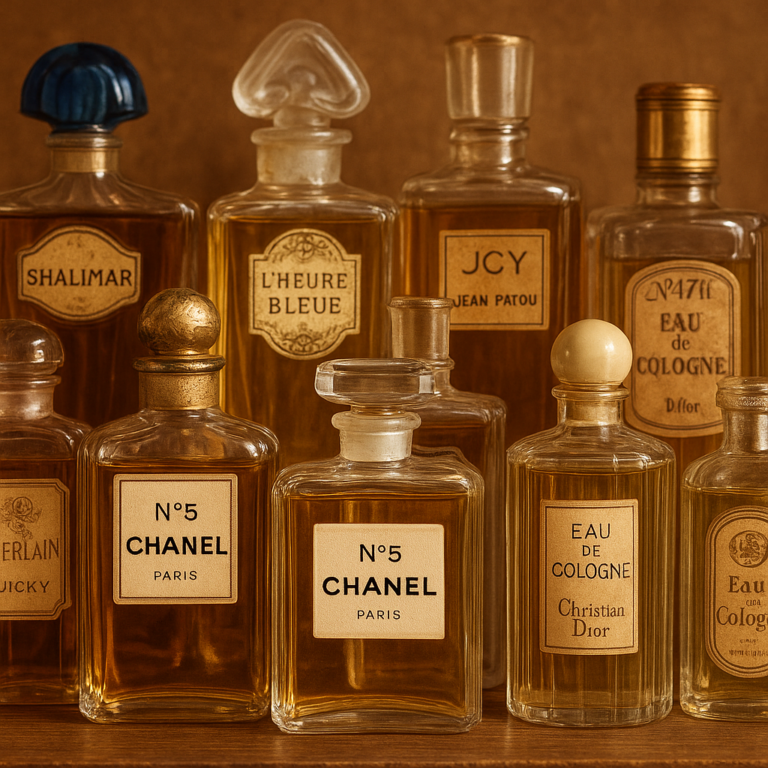
Imagine a room filled with hundreds of glass vials, each containing a different scent. This is the Perfumer’s Organ. At houses like Galimard and Guerlain, the master perfumer (or “nose”) sits at this organ to compose a fragrance.
The process is akin to composing music. The perfumer selects top notes (the first impression), heart notes (the core character), and base notes (the lingering trail).
The Story of Chanel No. 5
Let’s talk about the elephant in the room: Chanel No. 5. Created in 1921 by Ernest Beaux for Coco Chanel, it was the first perfume to use a high concentration of aldehydes.
- The Accident? Legend has it that Beaux accidentally added too much aldehyde, but Chanel loved the result.
- The Result: A scent that didn’t smell like a flower, but like “a woman.” It was abstract, modern, and revolutionary.
- The Legacy: It remains the best-selling perfume in the world, a testament to the power of innovation.
The Art of Blending
Creating a perfume is not just about mixing ingredients; it’s about balance. A single drop of a potent ingredient can ruin the entire composition. This is why master perfumers spend decades perfecting their craft.
Insider Tip: When you smell a perfume, try to identify the different layers. The top notes fade in 15 minutes, the heart notes last a few hours, and the base notes can linger for days.
🏆 Top 10 Most Influential Perfume Houses That Changed History

Here is our curated list of the 10 most influential perfume houses that shaped the industry. We’ve ranked them based on their historical impact, innovation, and enduring legacy.
| Rank | House | Founded | Key Innovation | Iconic Scent |
|---|---|---|---|---|
| 1 | Guerlain | 1828 | Perfumery as an art form; Olfactory Pyramid | Shalimar |
| 2 | Chanel | 1921 | Aldehydes; Abstract scent | Chanel No. 5 |
| 3 | Galimard | 1747 | Royal patronage; Continuous family ownership | Solenzara |
| 4 | Houbigant | 175 | First floral bouquet | Quelques Fleurs |
| 5 | Coty | 1904 | Mass market accessibility | L’Origan |
| 6 | Dior | 1947 | The “New Look” in scent | Miss Dior |
| 7 | Yves Saint Laurent | 1964 | Opulent, provocative scents | Opium |
| 8 | Serge Lutens | 192 | Niche avant-garde | La Fille de Berlin |
| 9 | Le Labo | 206 | Made-to-order freshness | Santal 3 |
| 10 | 471 | 1792 | The original Eau de Cologne | Original Eau de Cologne |
Deep Dive: The Top Contenders
1. Guerlain: The Imperial Standard
Guerlain is the grandfather of modern perfumery. They invented the concept of the “fragrance family” and created some of the most complex scents in history. Shalimar (1925) was the first oriental perfume, inspired by the love story of Emperor Shah Jahan and his wife Mumtaz Mahal.
2. Chanel: The Modernist
Chanel didn’t just make perfume; she made a statement. No. 5 was a rejection of the single-flower scents of the past. It was a symphony of notes, designed to be worn by the modern, independent woman.
3. Galimard: The Guardian of Tradition
While others chased trends, Galimard held onto the roots. They are one of the few houses that still use traditional methods and maintain a direct link to the 18th century. Their Museum-Factory in Grasse is a pilgrimage site for perfume lovers.
4. 471: The Original Cologne
Founded in 1792, 471 is the oldest continuously operating perfume house in the world. Their Original Eau de Cologne is a refreshing blend of citrus and herbs that defined the concept of “freshness.”
Check out the official history: Official 471 Shop: The World of Fragrances
🕰️ The Evolution of Fragrance Families: From Chypre to Gourmand
The Chypre Revolution
In 1917, François Coty created Chypre, a scent that combined bergamot, labdanum, and oakmoss. It was earthy, sophisticated, and unlike anything else. This gave birth to the Chypre family, which includes scents like Mitsouko by Guerlain.
The Floral Bouquet
Before Chypre, the dominant family was the Floral Bouquet. Houses like Houbigant and Lancôme specialized in scents that smelled like a garden in full bloom. L’Air du Temps by Nina Ricci is a classic example.
The Oriental and Woody
As the 20th century progressed, perfumers began exploring oriental (spicy, sweet, resinous) and wody (sandalwood, cedar, vetiver) notes. Santal 3 by Le Labo brought the wody family into the modern spotlight.
The Gourmand Era
In the 190s, Thierry Mugler changed everything with Angel. It was the first gourmand perfume, smelling like caramel, chocolate, and vanilla. Suddenly, perfume could taste like dessert! This opened the door for a whole new category of sweet, edible scents.
🔬 The Science Behind the Scent: Notes, Accords, and Olfactory Pyramids
Understanding the Olfactory Pyramid
Every perfume is structured like a pyramid:
- Top Notes: The first thing you smell. They are light and evaporate quickly (e.g., citrus, herbs).
- Heart Notes: The core of the fragrance. They emerge after the top notes fade (e.g., florals, spices).
- Base Notes: The foundation. They linger the longest and give the perfume its character (e.g., woods, musk, vanilla).
The Role of Accords
An accord is a blend of notes that creates a new, distinct scent. For example, the “rose accord” might not contain real rose, but a mix of geranium, lyche, and vanilla that smells like rose.
Synthetic vs. Natural
- Natural: Sourced from plants, animals, or minerals. Often more complex but less stable.
- Synthetic: Created in a lab. More consistent, sustainable, and capable of creating scents that don’t exist in nature.
Myth Buster: Synthetic doesn’t mean “cheap.” Many of the most expensive and complex perfuses rely heavily on high-quality synthetics.
🛍️ Decoding the Labels: Understanding Vintage vs. Modern Formulations
The Great Reformulation
If you’ve ever bought a vintage perfume and wondered why it smells different, you’re not alone. Reformulation is a common practice.
- Why? Regulations (IFRA) ban certain natural ingredients (like oakmoss and musk) due to allergen concerns.
- The Result: Modern versions often smell “lighter” or “cleaner” than their vintage counterparts.
How to Spot a Vintage Gem
- Batch Codes: Look for codes on the bottle or box.
- Packaging: Vintage bottles often have different fonts, caps, or box designs.
- Smell Test: Vintage scents tend to be richer, deeper, and longer-lasting.
The Collector’s Market
Vintage perfumes have become a collector’s item. Scents like Shalimar (pre-190s) or Opium (original formula) are highly sought after. However, be wary of fakes! Always buy from reputable dealers.
🌱 Sustainability and Ethics: The Future of Famous Perfume Houses
The Ethical Dilemma
The perfume industry faces a major challenge: sustainability.
- Overharvesting: Ingredients like sandalwood and rosewood are endangered.
- Animal Testing: While banned in the EU, it’s still a concern in some markets.
- Packaging: The industry is notorious for excessive packaging.
The Green Revolution
Many houses are stepping up:
- Guerlain: Comitted to sourcing sustainable ingredients and reducing water usage.
- Le Labo: Uses recycled glass and offers refill programs.
- 471: Focuses on natural ingredients and eco-friendly production.
The Future of Scent
The future lies in biotechnology. Scientists are now able to create rare molecules in the lab without harming the environment. This could mean a return to the complex, natural scents of the past, but with a green footprint.
🎓 The Art of the Nose: Training and Heritage of Master Perfumers
The Path to Becoming a “Nose”
Becoming a master perfumer is no small feat. It requires:
- A Sensitive Nose: You must be able to distinguish thousands of scents.
- Chemistry Knowledge: Understanding how molecules interact.
- Artistic Vision: The ability to tell a story through scent.
The Givaudan and Firmenich Schools
Many perfumers train at major flavor and fragrance companies like Givaudan or Firmenich. These schools offer rigorous programs that combine science and art.
The Legacy of the Family
At houses like Galimard, the knowledge is passed down through generations. Jean-Pierre Roux and his family have maintained the ancestral know-how for centuries. This continuity ensures that the scents remain true to their original vision.
Did you know? There are only about 20 master perfumers in the world! It’s an exclusive club.
💡 Quick Tips and Facts: Myths, Bloopers, and Hidden Gems
Myths Debunked
- Myth: “Perfume lasts longer on dry skin.”
Fact: Perfume lasts longer on moisturized skin. Apply unscented lotion before spraying. - Myth: “You should spray perfume on your wrists and rub them together.”
Fact: Rubing crushes the molecules and alters the scent. Just spray and let it dry. - Myth: “Expensive perfume is always better.”
Fact: Price doesn’t always equal quality. Some niche brands are overpriced, while some designer scents are masterpieces.
Hidden Gems
- The Museum of Perfume in Grasse: A must-visit for any perfume lover.
- The “Scent of the Year” Awards: Look out for the Fragrance Foundation Awards to discover new trends.
- Sample Sets: Before buying a full bottle, always try a sample set. Your skin chemistry is unique!
The Bloopers
- The “Accidental” Masterpiece: Many famous scents were accidents. Chanel No. 5 was created when Beaux added too much aldehyde.
- The “Wrong” Ingredient: Sometimes, a “bad” ingredient can make a scent unique. Civet (from a cat) was once a staple in perfumery, but now it’s mostly synthetic.
🏁 Conclusion

We’ve journeyed from the alabaster bottles of ancient Egypt to the high-tech labs of modern Grasse. We’ve seen how royal patronage shaped the industry, how synthetic chemistry revolutionized scent, and how niche houses are challenging the giants.
The history of famous perfume houses is not just a list of dates and names; it’s a story of human creativity, cultural evolution, and the endless pursuit of beauty. Whether you prefer the classic elegance of Guerlain, the modern edge of Chanel, or the fresh simplicity of 471, there’s a scent out there that tells your story.
So, the next time you spritz your favorite fragrance, remember: you’re not just smelling nice. You’re wearing a piece of history.
Final Thought: Which era of perfumery speaks to you the most? The royal opulence of the 18th century, the modernist revolution of the 20th, or the sustainable future of today? Let us know in the comments!
🔗 Recommended Links
Ready to explore the world of scent? Here are our top picks for where to shop and learn more.
👉 Shop Classic & Vintage Scents:
- Chanel No. 5: Amazon | Chanel Official
- Guerlain Shalimar: Amazon | Guerlain Official
- 471 Original Eau de Cologne: Amazon | 471 Official
- Galimard Solenzara: Amazon | Galimard Official
Explore Niche & Artistic Scents:
- Le Labo Santal 3: Amazon | Le Labo Official
- Serge Lutens La Fille de Berlin: Amazon | Serge Lutens Official
Books for the Scent Lover:
- Perfumes: The A-Z Guide by Luca Turin and Tania Sanchez
- The Secret of Scent by Luca Turin
- Fragrant: The Secret Life of Scent by Mandy Aftel
❓ FAQ

Which perfume house is the oldest in the world?
471 holds the title of the oldest continuously operating perfume house in the world. Founded in 1792 in Cologne, Germany, it has been producing its iconic Eau de Cologne for over two centuries. While Galimard (founded in 1747) is older, 471 has maintained continuous production of its original formula without interruption.
Read more about “🌍 How Many Perfumes Are There? The Shocking Truth (2026)”
How did Chanel No. 5 change the history of perfumery?
Chanel No. 5 revolutionized the industry by being the first perfume to use a high concentration of aldehydes. This created a complex, abstract scent that didn’t mimic a single flower but rather evoked a “feling.” It broke away from the traditional floral bouquets of the time and established the concept of the modern perfume as an artistic expression.
Read more about “🏛️ Why Are Perfume Brands Called “House”? The Secret Revealed (2026)”
What are the most iconic vintage perfumes from famous houses?
Some of the most sought-after vintage perfumes include:
- Guerlain Shalimar (pre-190s): Known for its rich, smoky vanilla and oakmoss.
- Yves Saint Laurent Opium (original formula): Famous for its intense, spicy, and oriental notes.
- Chanel No. 5 (pre-190s): Often described as deeper and more complex than the modern version.
- Houbigant Quelques Fleurs: A classic floral bouquet that defined the early 20th century.
Read more about “🌟 How Famous Perfume Brands Market Their Products (2026)”
How have luxury perfume houses evolved their branding over the decades?
Luxury perfume houses have shifted from exclusive, royal patronage to mass-market accessibility. In the 18th and 19th centuries, perfumes were sold to the aristocracy. The 20th century saw the rise of department stores and celebrity endorsements. Today, the focus is on storytelling, sustainability, and niche differentiation. Brands like Le Labo and Byredo have challenged the traditional luxury model by focusing on authenticity and minimalism.
Why do some vintage perfumes smell different from modern versions?
This is due to reformulation. Regulations by the IFRA (International Fragrance Association) have banned or restricted certain natural ingredients (like oakmoss and musk) due to allergen concerns. Modern versions often use synthetic substitutes to replicate the original scent, but the result can be lighter or less complex.
📚 Reference Links
- Guerlain Official Website: https://www.guerlain.com/
- Chanel Official Website: https://www.chanel.com/
- Galimard Official Website: https://www.galimard.com/
- 471 Official Website: https://471.com/en
- Le Labo Official Website: https://lelabofragrances.com/
- Serge Lutens Official Website: https://www.sergelutens.com/
- The Perfume Society: https://perfumesociety.org/
- Côte d’Azur France – History of Galimard: https://cotedazurfrance.com/to-do/flowers-and-perfumes/the-royal-history-of-galimard/
- IFRA (International Fragrance Association): https://ifraorg.org/
- Perfume Brands™ – What are 5 famous perfume brands?: https://www.perfumebrands.org/what-are-5-famous-perfume-brands/