Support our educational content for free when you purchase through links on our site. Learn more
🧪 What Category Is Perfume Business? (2026 Industry Breakdown)


The perfume business defies a single label, operating simultaneously as a luxury goods empire, a specialty chemical manufacturer, and a consumer discretionary powerhouse. When you ask what category is perfume business, the answer isn’t just one box; it’s a dynamic hybrid that spans from high-end fashion houses to industrial B2B labs.
Most market reports classify it under Beauty and Personal Care, yet its profit margins and brand equity rival the luxury fashion sector. It’s a unique beast where a single bottle can cost less than a latte in raw materials but sell for hundreds due to marketing magic.
Consider this: the global fragrance market is projected to exceed $50 billion by 2025, yet the industry relies on fewer than 10 master perfumers worldwide to create the scents we love. From the rose fields of Grasse to the synthetic labs of Switzerland, the supply chain is a global web of agriculture, chemistry, and art.
Key Takeaways
- Multi-Category Powerhouse: The industry sits at the intersection of Luxury Goods, Chemical Manufacturing, and Consumer Discretionary.
- Seven Core Segments: The market is split into Designer, Niche, Mass Market, Private Label, Home Fragrance, Personal Care, and Sustainable Beauty.
- High Margin, Low Cost: Raw materials often make up less than 5% of the retail price, with the rest driven by brand equity and packaging.
- Global Shift: The fastest growth is happening in clean beauty, gender-neutral scents, and personalized fragrance experiences.
Table of Contents
- ⚡️ Quick Tips and Facts
- 📜 A Brief History of the Fragrance Industry: From Ancient Temples to Modern Skyscrapers
- 🏢 Defining the Perfume Business Category: Where Does It Actually Fit?
- 📊 The 7 Core Segments of the Global Fragrance Market
- 1. Luxury and Designer Fragrances
- 2. Niche and Artisanal Perfumery
- 3. Mass Market and Drugstore Scents
- 4. Private Label and Contract Manufacturing
- 5. Home Fragrance and Candles
- 6. Personal Care and Body Mists
- 7. The Rising Star: Clean and Sustainable Beauty
- 🧪 Understanding the Supply Chain: From Raw Materials to Retail Shelves
- 💰 The Economics of Scent: Pricing Strategies and Profit Margins
- 🌍 Global Markets and Regional Preferences: Who Smells What Where?
- 🚀 Emerging Trends Shaping the Future of the Perfume Business
- 🛒 How to Start a Perfume Business: A Step-by-Step Guide for Entrepreneurs
- 🏆 Top Players and Key Brands Dominating the Industry
- ❓ Frequently Asked Questions About the Perfume Industry
- 🔗 Recommended Links for Aspiring Perfumers
- 📚 Reference Links and Industry Reports
- 🏁 Conclusion
⚡️ Quick Tips and Facts
Before we dive into the nitty-gritty of where the perfume business actually fits on the corporate org chart, let’s hit you with some high-octane facts that might just change how you smell your morning coffee.
- It’s a Multi-Billion Dollar Sensation: The global fragrance market isn’t just growing; it’s exploding. We’re talking about a sector expected to surpass $50 billion by 2025, with a Compound Annual Growth Rate (CAGR) of roughly 5–7%. 📈
- The “Fine” vs. “Functional” Divide: Not all scents are created equal. The industry splits into Fine Fragrance (that bottle of Chanel No. 5 you save for anniversaries) and Consumer Fragrance (the scent trapped inside your laundry detergent).
- The Secret Giants: While you know Dior and Yves Saint Laurent, the real power players are the B2B giants like Givaudan and Firmenich. These Swiss behemoths create the scents for hundreds of other brands. You might be wearing a scent they invented without ever knowing their name. 🇨🇭
- The “Nose” is a Rare Breed: There are fewer than 10 master perfumers in the world. It takes years of training to distinguish between 3,0+ raw materials.
- Scent is Memory: Did you know the olfactory bulb is directly connected to the brain’s limbic system? That’s why a specific scent can instantly transport you back to your grandmother’s kitchen or a first date in 204. 🧠✨
If you’ve ever wondered, “What are perfume brands called?” when they aren’t just “brands,” check out our deep dive on what perfume houses are actually named.
📜 A Brief History of the Fragrance Industry: From Ancient Temples to Modern Skyscrapers

To understand where the perfume business fits today, we have to look at where it started. It wasn’t always about luxury retail and department store counters.
The Alchemy of Antiquity
Long before Tom Ford or Le Labo, the Egyptians were burning incense to the gods. The word “perfume” itself comes from the Latin per fum, meaning “through smoke.” 🏺
- Ancient Egypt: Used scents for religious rituals and embalming.
- Rome & Greece: Perfume became a status symbol for the elite, used in baths and banquets.
- The Middle Ages: The art of distillation was perfected in the Islamic world, leading to the creation of rose water and essential oils.
The Birth of the Modern Industry
Fast forward to the 19th century. The invention of synthetic aroma chemicals changed everything. Before this, perfumers were limited to what they could extract from nature. Suddenly, they could create scents that didn’t exist in nature, like coumarin (hay-like) and vanillin.
This shift birthed the modern perfume industry, moving it from a cottage craft to a manufacturing powerhouse. By the early 20th century, brands like Chanel and Guerlain were establishing the luxury goods model we recognize today.
Fun Fact: The first synthetic musk was discovered by accident! Imagine trying to make a new explosive and ending up with a scent that smells like a clean shirt. 🧪
🏢 Defining the Perfume Business Category: Where Does It Actually Fit?
Here is the million-dollar question: What category is the perfume business?
If you ask a stockbroker, they’ll say Consumer Discretionary. If you ask a chemist, they’ll say Specialty Chemicals. If you ask a fashion designer, they’ll scream Luxury Goods.
The truth? It’s all of them.
The perfume business is a multifaceted gem nestled primarily within the Beauty and Personal Care sector, but it stretches its arms into Luxury Goods, Manufacturing, Retail, and even Agriculture.
The Primary Classification: Beauty & Personal Care
In most market research reports (like those from Statista), the perfume business is categorized under Beauty and Personal Care. This is because the end-user is an individual looking to enhance their personal appearance and hygiene.
The Secondary Classification: Luxury Goods
However, the Fine Fragrance segment operates almost entirely as a Luxury Goods industry.
- High Margins: Unlike mass-market soap, a bottle of Cred Aventus carries a massive markup.
- Brand Equity: The value lies in the story, the bottle, and the heritage, not just the liquid.
- Exclusivity: Limited editions and high price points create a sense of scarcity.
The Hidden Classification: Chemical Manufacturing
Don’t forget the B2B side. Companies like Givaudan and IFF (International Flavors & Fragrances) are classified as Chemical Manufacturers. They don’t sell to you; they sell to you (via the brands you buy) and to companies making shampoo, candles, and even meat substitutes.
Wait, meat substitutes? Yes! The same industry that makes your Dior scent also creates the “grilled steak” aroma for plant-based burgers. The line between fine fragrance and functional fragrance is blurier than you think.
📊 The 7 Core Segments of the Global Fragrance Market
To truly grasp the scope, we need to break the industry down into its seven core segments. This is where the rubber meets the road (or the scent meets the skin).
1. Luxury and Designer Fragrances
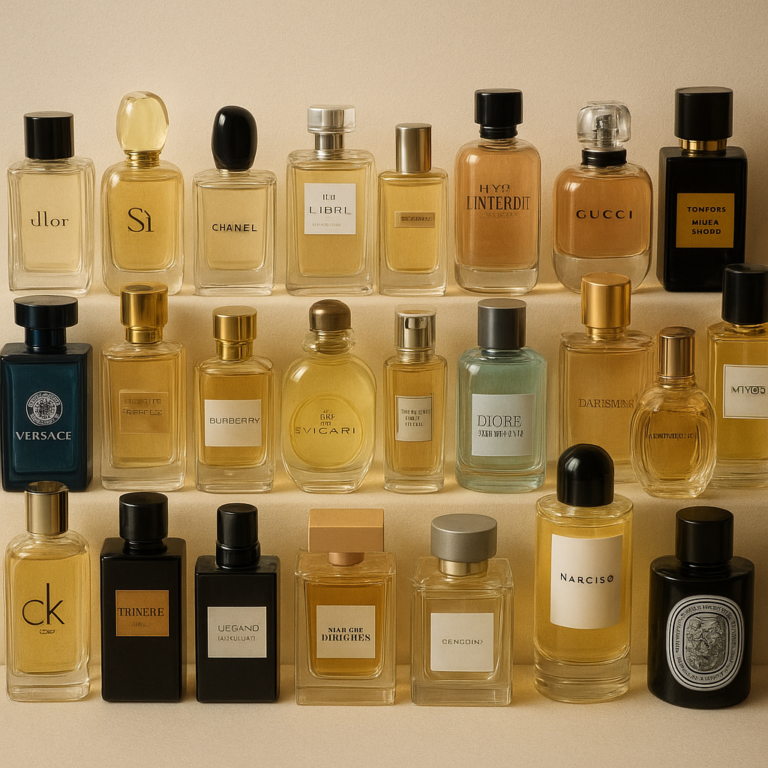
This is the crown jewel. These are scents from fashion houses like Chanel, Dior, Gucci, and Hermès.
- Characteristics: High price points, heavy marketing, iconic packaging, and a focus on brand heritage.
- Target Audience: Consumers looking for status, quality, and a “signature scent.”
- Key Insight: These brands often license their names to fragrance houses (like Estée Lauder owning Tom Ford or L’Oréal owning YSL) to handle the heavy lifting of production and distribution.
2. Niche and Artisanal Perfumery
The “cool kids” of the industry. Brands like Le Labo, Byredo, Diptyque, and Serge Lutens.
- Characteristics: Small-batch production, unique and often challenging scent profiles, minimal marketing, and a focus on ingredients over brand name.
- Target Audience: Scent enthusiasts, “nose” collectors, and those who want to avoid smelling like everyone else.
- Trend: This segment is growing faster than the luxury segment, driven by Millennials and Gen Z who value authenticity.
3. Mass Market and Drugstore Scents
The volume drivers. Brands like Coty, Elizabeth Arden, and Calvin Klein (in their lower-tier lines).
- Characteristics: Affordable, widely available in supermarkets and drugstores, and designed to appeal to the broadest possible audience.
- Strategy: High volume, lower margin. Think CK One or Davidoff Cool Water.
- Challenge: Intense competition and the rise of private label brands.
4. Private Label and Contract Manufacturing
The invisible engine. This is where companies like Firmenich and Robertet create scents for brands that don’t have their own labs.
- How it works: A startup wants to launch a perfume but has no chemists. They hire a contract manufacturer to create a scent, bottle it, and label it with their brand name.
- Growth: This sector is booming due to the rise of DTC (Direct-to-Consumer) brands and social media influencers launching their own lines.
5. Home Fragrance and Candles
Scent isn’t just for people anymore. It’s for your living room.
- Products: Candles, red diffusers, room sprays, and electric plug-ins.
- Key Players: Yankee Candle, Jo Malone Home, Voluspa.
- Insight: This segment has seen massive growth as people spend more time at home and view their living spaces as extensions of their personal brand.
6. Personal Care and Body Mists
The “entry-level” fragrance.
- Products: Body lotions, shower gels, deodorants, and body mists.
- Strategy: These products often use the same scent profile as a brand’s flagship perfume but at a lower concentration and price point.
- Example: Bath & Body Works is a giant in this space, offering thousands of scent combinations.
7. The Rising Star: Clean and Sustainable Beauty
The new frontier.
- Focus: Ethical sourcing, cruelty-free testing, vegan ingredients, and refillable packaging.
- Brands: Clean Reserve, Aesop, Maison Margiela (with their “Replica” line focusing on sustainability).
- Why it matters: Consumers are increasingly demanding transparency. If a brand can’t prove their vanilla is fair-trade, they might lose the customer.
🧪 Understanding the Supply Chain: From Raw Materials to Retail Shelves
Ever wonder how a scent goes from a flower field in Grasse, France, to your bathroom shelf? It’s a journey of logistics, chemistry, and marketing.
Step 1: Sourcing Raw Materials
It starts with nature (or the lab).
- Naturals: Rose petals from Bulgaria, Sandalwood from India, Vanilla from Madagascar.
- Synthetics: Lab-created molecules that mimic naturals or create entirely new scents (like Iso E Super).
- Challenge: Climate change is threatening the supply of key ingredients like sandalwood and rose.
Step 2: Creation and Blending
This is where the Master Perfumer (or “The Nose”) takes over.
- The Formula: A typical perfume has 20 to 80 ingredients.
- The Process: The perfumer creates a “juice” in a lab, testing it against skin to see how it evolves over time.
- Maturation: The blend is often aged for weeks or months to let the notes marry.
Step 3: Manufacturing and Bottling
Once the formula is approved, it’s time for mass production.
- Dilution: The concentrate is mixed with alcohol and water.
- Filtration: To ensure clarity and stability.
- Bottling: Automated lines fill, cap, and label millions of bottles.
Step 4: Distribution and Retail
The final leg of the journey.
- Wholesale: Brands sell to department stores (like Sephora, Nordstrom) and duty-free shops.
- E-commerce: Direct sales via brand websites and marketplaces like Amazon.
- Counterfeit Warning: The supply chain is rife with fakes. Brands use blockchain and QR codes to verify authenticity.
Did you know? The journey of a single drop of perfume can involve four different countries before it hits your skin. 🌍
💰 The Economics of Scent: Pricing Strategies and Profit Margins
Why does a 50ml bottle of Baccarat Rouge 540 cost $325, while a similar smelling drugstore brand costs $15? Let’s break down the economics.
The Cost Breakdown
| Component | Approx. % of Retail Price | Notes |
|---|---|---|
| Marketing & Advertising | 40% – 60% | The biggest cost. Celebrities, billboards, influencers. |
| Packaging | 10% – 20% | Heavy glass, custom caps, fancy boxes. |
| Profit Margin | 15% – 25% | For the brand and retailer. |
| Raw Materials | 1% – 5% | Surprisingly low! Even expensive ingredients are used in tiny amounts. |
| Manufacturing & Logistics | 5% – 10% | Bottling, shipping, warehousing. |
The “Luxury” Markup
In the luxury segment, the price is rarely about the cost of goods. It’s about perceived value.
- Brand Equity: You are paying for the name on the bottle.
- Exclusivity: High prices create a barrier to entry, making the product feel more desirable.
- Experience: The unboxing, the store service, the tester experience.
The “Mass Market” Strategy
In the mass market, the strategy is volume.
- Low Margin, High Turnover: Brands make pennies per bottle but sell millions.
- Cost Cutting: Cheaper packaging, simpler formulas, and aggressive discounting.
The Paradox: Sometimes, the “cheap” perfume has better ingredients than the “expensive” one. But the expensive one has a better story. 📖
🌍 Global Markets and Regional Preferences: Who Smells What Where?
Scent is cultural. What smells “luxurious” in Paris might smell “medicinal” in Tokyo.
Europe: The Home of Tradition
- Preferences: Classic, elegant, and often subtle.
- Key Markets: France, Italy, UK.
- Trend: A return to niche perfumery and heritage brands.
North America: Bold and Fresh
- Preferences: Sweet, fruity, and long-lasting. Americans love a scent that projects.
- Key Markets: USA, Canada.
- Trend: The rise of clean beauty and gender-neutral scents.
Asia: The Rise of the “Scent of Clean”
- Preferences: Light, floral, and aquatic. Heavy, musky scents are often avoided.
- Key Markets: Japan, South Korea, China.
- Trend: Cultural fusion and local ingredients (like yuzu, matcha, and cherry blossom).
The Middle East: Opulence and Intensity
- Preferences: Rich, spicy, and long-lasting. Oud (agarwood) is king here.
- Key Markets: UAE, Saudi Arabia.
- Trend: Attar (oil-based perfumes) and luxury niche brands are booming.
Fun Fact: In some Middle Eastern cultures, it’s common to offer guests a scent experience (like burning incense) as a sign of hospitality. 🕌
🚀 Emerging Trends Shaping the Future of the Perfume Business
The industry isn’t standing still. Here are the trends that will define the next decade.
1. Sustainability and Ethical Sourcing
Consumers are demanding transparency.
- Refillable Bottles: Brands like Le Labo and Maison Francis Kurkdjian offer refills to reduce waste.
- Vegan & Cruelty-Free: No animal testing, no animal-derived ingredients (like civet or musk).
- Biotech: Using fermentation to create sustainable versions of rare ingredients (like sandalwood).
2. Personalization and Bespoke Scents
One size does not fit all.
- AI-Driven Scents: Apps that ask you questions about your preferences and generate a custom formula.
- In-Store Experiences: Boutiques where you can mix your own scent.
3. Gender Fluidity
The lines between “Men’s” and “Women’s” perfumes are blurring.
- Unisex Scents: Brands like Byredo and Escentric Molecules focus on scents that work on anyone.
- Marketing Shift: No more pink for girls and blue for boys.
4. Tech Integration
- VR/AR: Virtual try-ons where you can “smell” a scent through your screen (yes, it’s coming!).
- Blockchain: Verifying authenticity and tracking the supply chain.
🛒 How to Start a Perfume Business: A Step-by-Step Guide for Entrepreneurs
Thinking of launching your own line? It’s easier than ever, but harder than it looks. Here’s the roadmap.
Step 1: Define Your Niche
Don’t just make “another perfume.” Are you clean, vintage, gender-neutral, or eco-friendly?
- Tip: Look at the gaps in the market. What are people complaining about?
Step 2: Source Your Fragrance
You have two options:
- Hire a Perfumer: Expensive but unique.
- Use a Contract Manufacturer: Cheaper, faster, but less unique.
- Buy Pre-made Formulas: The fastest route, but you risk having the same scent as someone else.
Step 3: Develop Your Brand
The brand is 90% of the value.
- Name: Make it memorable.
- Packaging: Invest in a great bottle and box.
- Story: Why does this scent exist?
Step 4: Navigate Regulations
- IFRA Standards: Ensure your formula complies with the International Fragrance Association safety standards.
- Labeling: Follow FDA (or local) regulations for ingredient listing.
Step 5: Launch and Market
- Discovery Sets: Sell small samples first. It’s the best way to get people to try before they buy.
- Social Media: Use Instagram and TikTok to show the “behind the scenes” of your brand.
- Influencers: Partner with micro-influencers in the beauty niche.
Real Talk: The hardest part isn’t making the scent; it’s selling the story. As the founders of Who Is Elijah (a brand that grew to $20M in 5 years) said, “How do you sell a smell online through a picture?” The answer is trust and community. 🤝
🏆 Top Players and Key Brands Dominating the Industry
Who are the giants holding the keys to the kingdom?
The B2B Giants (The “Noses” Behind the Scenes)
- Givaudan: The world’s largest flavor and fragrance company.
- Firmenich: Known for innovation and sustainability.
- IFF (International Flavors & Fragrances): A powerhouse in both food and fragrance.
- Robertet: Specializes in natural ingredients.
The Luxury Conglomerates
- L’Oréal Luxury Division: Owns YSL, Lancôme, Armani, Kiehl’s.
- Estée Lauder Companies: Owns Tom Ford, Jo Malone, Le Labo, Aveda.
- LVMH: Owns Dior, Guerlain, Kenzo, Acqua di Parma.
- Coty: Owns Gucci, Burberry, Chloé, Calvin Klein.
The Niche Powerhouses
- Le Labo: Known for Santal 3 and hand-blended scents.
- Byredo: Scandinavian minimalism with Gypsy Water.
- Diptyque: Famous for candles and Baies.
- Maison Francis Kurkdjian: High-end luxury with Baccarat Rouge 540.
Check out our Fragrance Reviews for deep dives into these brands!
❓ Frequently Asked Questions About the Perfume Industry
Is the perfume business considered a part of the cosmetics or beauty industry?
Yes. The primary classification is Beauty and Personal Care. It sits alongside skincare, makeup, and haircare. However, due to its high price points and brand focus, it also overlaps significantly with the Luxury Goods sector.
How does the perfume industry categorize different fragrance brands?
Brands are categorized by market segment:
- Luxury/Designer: High-end, fashion-backed.
- Niche: Independent, artisanal, unique.
- Mass Market: Affordable, widely available.
- Private Label: Made for other brands.
What type of industry is the perfume business classified under?
In economic terms, it’s a Manufacturing industry (specifically Specialty Chemicals). In retail terms, it’s Consumer Discretionary. In marketing terms, it’s Luxury Goods. It’s a hybrid beast.
What industry classification code is used for the perfume business?
In the US, the NAICS code is 32561 (Perfume and Toilet Preparation Manufacturing). In the UK, it falls under SIC 2042 (Manufacture of perfumes and toilet preparations).
Is the fragrance sector considered part of the luxury goods market?
Absolutely. The Fine Fragrance segment is a core pillar of the global luxury market. It shares the same dynamics as luxury fashion and watches: high margins, brand heritage, and exclusivity.
How is the perfume business categorized in market research reports?
Reports from firms like Euromonitor, Mintel, and Statista typically categorize it under Beauty & Personal Care, with a specific sub-segment for Fragrances. They often further break it down by Gender (Men’s, Women’s, Unisex) and Price Point (Mass, Premium, Luxury).
What are the main sub-sectors within the global perfume industry?
- Fine Fragrance: Personal wear.
- Functional Fragrance: Scents in detergents, soaps, and air fresheners.
- Home Fragrance: Candles and diffusers.
- Flavor & Fragrance (B2B): Ingredients for food and other industries.
🔗 Recommended Links for Aspiring Perfumers
Ready to take the plunge? Here are some resources to get you started.
👉 Shop Top Brands & Discovery Sets:
- Sephora: Shop Fragrances on Sephora
- Nordstrom: Shop Designer Perfumes on Nordstrom
- Amazon: Shop Fragrance Discovery Sets on Amazon
- FragranceX: Shop Discount Perfumes on FragranceX
Books & Education:
- Perfumes: The Guide by Luca Turin and Tania Sanchez (The bible of scent).
- The Secret of Scent by Luca Turin (The science behind the smell).
- Perfume Guides on Perfume Brands™ for expert advice.
📚 Reference Links and Industry Reports
For those who love the data, here are the sources we consulted:
- International Fragrance Association (IFRA): IFRA Official Site – The global standard for safety and sustainability.
- Statista: Fragrance Market Statistics – For the latest market value and growth data.
- Euromonitor International: Beauty and Personal Care Reports – Deep dives into consumer trends.
- About Mechanics: What Is the Fragrance Industry? – A comprehensive overview of the industry scope.
- Wikipedia: Category: Fragrance Companies – A list of major players.
🏁 Conclusion

So, what category is the perfume business? It’s a chameleon. It’s a chemical factory, a luxury boutique, a retail empire, and an art studio all rolled into one.
We started this journey asking if perfume was just a “pretty smell.” The answer is a resounding no. It’s a complex ecosystem driven by chemistry, psychology, marketing, and culture. Whether you’re a consumer looking for your next signature scent, or an entrepreneur dreaming of launching your own line, understanding these categories is your first step to success.
The industry is evolving rapidly. Sustainability, personalization, and tech are reshaping the landscape. But one thing remains constant: the power of scent to evoke emotion and create memories.
Final Thought: As we saw with the story of Who Is Elijah, success isn’t just about the scent; it’s about the story you tell and the community you build. So, what’s your story going to be?
Ready to find your perfect scent? Explore our Fragrance Reviews or check out our Luxury Brands guide to start your journey today! 🌟