Support our educational content for free when you purchase through links on our site. Learn more
Famous Perfumers and Their Brands: 18 Noses to Know 🌟

Famous perfumers and their brands are easiest to understand when you separate the people who compose fragrances from the founders and creative directors who shape a perfume house. Start with houses such as Maison Francis Kurkdjian, Escentric Molecules, and Tauer Perfumes for distinctive perfumer-led identities, then explore renowned creators whose work spans multiple brands.
A famous name can be a helpful clue, but it isn’t a promise that you’ll love the scent—or that the named personally formulated every fragrance in the collection. We’ve found the best approach is to follow the credits, sample on skin, and give each perfume time to tell its story. One perfumer can create a quiet, airy composition for one house and a bold, head-turning scent for another.
Key Takeaways
- Perfumer, founder, and creative director are different roles. Check who composed a fragrance and who built or directs its brand.
- Explore 18 influential perfumers and fragrance houses, including Francis Kurkdjian, Geza Schoen, Andy Tauer, Alberto Morillas, and Christine Nagel.
- A perfumer’s style is a guide, not a guarantee. The brand brief and formula matter, too.
- Sample before buying. Test on skin and revisit the fragrance after it has developed.
- Choose by scent style, not reputation alone. Your nose gets the final vote.
Table of Contents
- ⚡️ Quick Tips and Facts: Famous Perfumers and Their Brands
- 🕰️ How the Perfumer Became a Brand: A Brief History
- 🌟 Famous Perfumers and the Fragrance Brands They Built
- 1. Francis Kurkdjian — Maison Francis Kurkdjian
- 2. Kilian Hennessy — By Kilian
- 3. Frédéric Malle — Editions de Parfums Frédéric Malle
- 4. Serge Lutens — Serge Lutens
- 5. Roja Dove — Roja London
- 6. Alberto Morillas — Mizensir
- 7. Geza Schoen — Escentric Molecules
- 8. Andy Tauer — Tauer Perfumes
- 9. Lorenzo Villoresi — Lorenzo Villoresi Firenze
- 10. Pierre Guillaume — Parfumerie Générale and Pierre Guillaume Paris
- 11. Mona di Orio — Mona di Orio
- 12. Annick Goutal — Goutal Paris
- 13. Olivier Cresp — Akro
- 14. Dominique Ropion — Signature Fragrances and Iconic Collaborations
- 15. Jean-Claude Ellena — Hermès and His Independent Perfume Projects
- 16. Christine Nagel — Hermès and Her Signature Creations
- 17. Nathalie Lorson — Perfumery Collaborations and Standout Scents
- 18. Bertrand Duchaufour — Niche Perfume Houses and Notable Comissions
- 🏷️ Perfumer-Owned Brands vs. Brands Created by Perfumers
- 🧪 How a Perfumer’s Style Shapes a Fragrance Brand
- 🌿 Signature Notes, Ingredients, and Olfactory Families
- 🛍️ How to Choose a Perfumer-Led Fragrance Brand
- 💡 Sampling, Wearing, and Collecting Perfumer-Created Perfumes
- 🔎 How to Find Out Who Created a Perfume
- ✨ Recommended Perfumer Brands by Fragrance Style
- ✅ Quick Tips for Exploring Famous Perfumer Brands
- 🏁 Conclusion
- 🔗 Recommended Links
- ❓ FAQ: Famous Perfumers and Their Brands
- Who are the most famous perfumers in the world?
- Which famous perfumers have their own perfume brands?
- What is the difference between a perfumer and a fragrance brand founder?
- Which perfumer-created brands are best for beginners?
- Are niche perfume brands always created by their founders?
- How can I identify a fragrance’s perfumer?
- 📚 Reference Links
⚡️ Quick Tips and Facts: Famous Perfumers and Their Brands
| At a glance | What to know |
|---|---|
| A perfumer’s job | A perfumer composes a fragrance; a founder or creative director may guide the brand without personally formulating every scent. |
| Best-known perfumer-founded houses | Maison Francis Kurkdjian, Editions de Parfums Frédéric Malle, By Kilian, Serge Lutens, and Escentric Molecules. |
| Best way to shop | Sample on skin, then give the scent several hours. Fragrance changes as volatile materials evaporate, so a quick bloter sniff is only the opening scene. |
| Don’t assume | A famous perfumer’s name on a bottle does not automatically mean they personally composed it. Check the brand’s credits and official product information. |
| For more fragrance terminology | Our guide to what perfume brands are called explains the difference between perfume houses, labels, and fragrance brands. |
Our short version: perfumer-led brands can offer a clearer creative point of view, but the founder’s reputation is only a starting clue—not a guarantee that every fragrance will suit your skin or taste. For more context, browse our fragrance reviews and luxury fragrance brands.
🕰️ How the Perfumer Became a Brand: A Brief History

For generations, perfume houses often kept the perfumer’s identity behind the curtain. The public saw the fashion house, bottle, and campaign; the person who composed the scent remained largely anonymous. That has changed. Today, perfumers are increasingly recognized as creative authors, while niche and luxury houses often put their names at the center of the label.
The shift does not mean that every famous-named fragrance is a solo creation. Perfume-making can involve a brief, creative direction, a perfumer’s formula, ingredient suppliers, evaluators, and a brand team. As IFRA explains, fragrance is a complex mixture of ingredients, and the industry also works within standards intended to support safe use.
The contrast is visible across the industry:
- Perfumer-founded or perfumer-led houses: Francis Kurkdjian helped establish Maison Francis Kurkdjian; Alberto Morillas founded Mizensir; and Geza Schoen created Escentric Molecules.
- Fashion and luxury houses with named in-house perfumers: Chanel’s Olivier Polge, Hermès’s Christine Nagel, and Louis Vuitton’s Jacques Cavallier-Belletrud work within distinct house identities.
- Creative directors who are not necessarily perfumers: Comme des Garçons’ Christian Astuguevieille has described his role as creative direction rather than that of a “nose,” illustrating why job titles matter. 10 Magazine’s profile discusses this distinction alongside several influential figures.
One detail worth keeping in mind: brand history and perfumer credits can differ by fragrance and by date. A house may change its creative leadership, and a brand founder may commission work from multiple perfumers. So, when two sources disagree, we trust official brand biographies for current roles and official fragrance credits for who composed a particular scent.
🌟 Famous Perfumers and the Fragrance Brands They Built
The list below distinguishes between perfumers who founded or lead their own fragrance houses and renowned perfumers whose work is closely associated with another brand. That distinction keeps the story accurate—and prevents a famous nose from being credited with a company they never owned.
1. Francis Kurkdjian — Maison Francis Kurkdjian
Francis Kurkdjian became one of contemporary perfumery’s most recognizable names through both commissioned work and his own house, Maison Francis Kurkdjian. The brand is known for polished, expressive compositions, with Baccarat Rouge 540 becoming its most widely discussed calling card.
Kurkdjian’s route is a useful reminder that a perfumer can work across different creative settings. A fragrance created for a client or fashion house is not the same thing as owning a brand; his own label gives him a separate platform for presenting a broader house identity.
What to explore
- Baccarat Rouge 540: a luminous, sweet-wody scent with a striking trail; polarizing if you prefer quiet, fresh fragrances.
- Aqua Universalis: a cleaner, lighter direction within the house’s catalog.
- Oud Satin Mood: a richer rose-and-oud style for those who like plush, enveloping scents.
We recommend starting with samples rather than buying based on social-media hype. The scent that fills a room beautifully may feel overpowering on your skin or in your office.
👉 Shop Maison Francis Kurkdjian: Amazon search | Maison Francis Kurkdjian Official Website
2. Kilian Hennessy — By Kilian
Kilian Hennessy is a founder and creative force behind By Kilian, a luxury fragrance house built around theatrical storytelling, distinctive packaging, and bold scent profiles. He is not best described as a trained perfumer who personally formulates every fragrance; the brand collaborates with professional perfumers to bring its creative direction to life.
That distinction is part of the appeal. The brand’s identity is unmistakable even though the formulas are created through collaboration. Angels’ Share, Love, Don’t Be Shy, and Black Phantom show how far apart the house’s moods can stretch—from bozy gourmand to sweet floral to dark, rum-like richness.
Best for: fragrance fans who enjoy strong character, polished presentation, and a little drama.
Potential drawback: the intensity and sweetness of some releases can be a lot in warm weather or close quarters.
👉 Shop By Kilian: Amazon search | By Kilian Official Website
3. Frédéric Malle — Editions de Parfums Frédéric Malle
Frédéric Malle’s Editions de Parfums puts the perfumer’s authorship in the spotlight: the house presents fragrances as works by named creators, rather than hiding the perfumer behind the brand. Malle himself is a publisher and creative director, not the formulator of every scent.
That approach makes the line especially useful for anyone curious about the artistry behind perfumery. Portrait of a Lady, created by Dominique Ropion, is a bold rose-and-patchouli statement; Musc Ravageur, by Maurice Roucel, is a warm, sensual classic; En Passant, by Olivia Giacobetti, offers a softer, airy floral impression.
Our tip: read the perfumer credit as carefully as the fragrance notes. It helps you follow a creator’s work across different houses and spot recurring stylistic preferences.
👉 Shop Editions de Parfums Frédéric Malle: Amazon search | Official Website
4. Serge Lutens — Serge Lutens
Serge Lutens is a celebrated artist, photographer, and fragrance creator whose namesake brand is known for evocative, often unconventional scents. The house’s official collection includes works such as Ambre Sultan, Féminité du Bois, and La Fille de Berlin. Serge Lutens’ official site presents the brand’s fragrances and creative universe.
Lutens is often discussed as an auteur of perfume, but it’s still useful to distinguish creative authorship from the technical role of perfumer. Fragrance houses may involve skilled formulators and collaborators, even when the brand’s artistic direction comes from a single recognizable figure.
Best for: people drawn to atmospheric, sculptural scents rather than easy “smells like a shower” simplicity.
Potential drawback: some compositions can feel challenging if you want a bright, uncomplicated everyday fragrance.
👉 Shop Serge Lutens: Amazon search | Serge Lutens Official Website
5. Roja Dove — Roja London
Roja Dove founded Roja London, a luxury perfume house associated with opulent compositions and elaborate presentation. Dove is widely known as a fragrance expert and brand founder; individual Roja fragrances may involve perfumers and collaborators, so consult the brand’s own information before attributing a particular formula.
The house’s range includes Elysium, Enigma, and Oud variations. These scents illustrate a high-impact approach: polished, expressive, and often designed to feel unmistakably dressed up.
Who may love it: collectors who value a lavish fragrance wardrobe and enjoy bold, well-defined styles.
Who may not: anyone seeking discreet, minimalist scents for a shared workspace.
👉 Shop Roja London: Amazon search | Roja London Official Website
6. Alberto Morillas — Mizensir
Alberto Morillas is one of the best-known working perfumers, with a career spanning fragrances for many international brands. He also founded Mizensir, which gives his own creative work a distinct home. Mizensir’s catalog includes For Your Love, Perfect Oud, and fragrances inspired by clean, comforting everyday materials.
Morillas’s career illustrates why “famous perfumer” and “founder of a perfumer brand” are related—but not identical—categories. A perfumer may compose for major fashion houses while developing a more personal voice through an independent label.
Try Mizensir if: you want a refined niche house with styles ranging from fresh to woody and sensual.
Keep in mind: a perfumer’s personal line may feel different from their mass-market hits, so don’t expect every formula to share the same signature.
👉 Shop Mizensir: Amazon search | Mizensir Official Website
7. Geza Schoen — Escentric Molecules
Geza Schoen created Escentric Molecules, a brand that helped make the idea of a minimalist, molecule-focused fragrance widely recognizable. Molecule 01 centers on Iso E Super, while Escentric 01 uses the same material within a more complex formula.
This is a useful case study in branding and perception: the same fragrance can smell surprisingly different from person to person, and some wearers notice it more on their clothing than on their skin. That doesn’t mean it has disappeared; olfactory adaptation can make a scent less noticeable to the wearer over time.
Best for: people who prefer subtle, woody, skin-like fragrances.
Potential drawback: if you expect a dramatic cloud of scent, the minimalist style may seem underwhelming.
👉 Shop Escentric Molecules: Amazon search | Official Website
8. Andy Tauer — Tauer Perfumes
Andy Tauer founded Tauer Perfumes, an independent house known for distinctive, often bold compositions. L’Air du Désert Marocain is its best-known release, celebrated by enthusiasts for its dry, spicy, resinous atmosphere.
Tauer’s independent status is part of the brand’s appeal: the house has a strong authorial identity, and its fragrances don’t always follow the smooth, crowd-pleasing template of department-store launches. That can be exhilarating—or a little much if your nose wants a soft landing.
Try it this way: sample on skin, then revisit after an hour. The opening may be sharper than the settled, warmer drydown.
👉 Shop Tauer Perfumes: Amazon search | Tauer Perfumes Official Website
9. Lorenzo Villoresi — Lorenzo Villoresi Firenze
Lorenzo Villoresi established his Florentine perfume house to explore traditional materials and rich olfactory references. Lorenzo Villoresi Firenze offers fragrances, home scents, and personal-care products, with a style that often draws on travel, history, and classical perfumery.
Teint de Neige is among the house’s most recognizable fragrances, a powdery, softly sweet scent that can feel nostalgic and elegant. It’s a strong example of why niche perfumes should be sampled before purchase: a powdery profile can be comforting to one person and too cosmetic for another.
Best for: fans of powder, florals, incense, and traditional perfumery.
Potential drawback: the classic style may feel less airy or minimalist than contemporary “clean” fragrances.
👉 Shop Lorenzo Villoresi: Amazon search | Official Website
10. Pierre Guillaume — Parfumerie Générale and Pierre Guillaume Paris
French perfumer Pierre Guillaume developed Pierre Guillaume Paris, an independent fragrance house known for experimenting with unusual contrasts and materials. Older references may use the name Parfumerie Générale, while current collections and brand presentations have evolved over time; consult the official site for the latest lineup.
The house is a good fit for curious fragrance wearers who enjoy exploring beyond familiar citrus, vanilla, and rose formulas. As always, the niche label alone doesn’t tell you whether a scent is wearable for you: try the actual fragrance, not the reputation.
👉 Shop Pierre Guillaume Paris: Amazon search | Pierre Guillaume Official Website
11. Mona di Orio — Mona di Orio
Mona di Orio founded her eponymous perfume house after studying with legendary perfumer Edmond Roudnitska. The brand is known for an artistic, material-focused style and fragrances including Oudh Osmanthus and Cuir. The house’s current availability and collection may vary by market, so check its official channels and authorized retailers before buying.
Mona di Orio’s story resonates with perfume enthusiasts because it connects mentorship, technical training, and individual artistic expression. Her fragrances are often described as distinctive rather than anonymous—a strength for collectors, though not necessarily the safest blind buy.
👉 Shop Mona di Orio: Amazon search
12. Annick Goutal — Goutal Paris
Annick Goutal was a pianist and model before establishing her fragrance house in Paris. The brand, now known as Goutal Paris, developed a reputation for romantic, expressive scents such as Eau d’Hadrien, Petite Chérie, and Quel Amour!
The house has continued beyond its founder, so it’s more accurate to describe Goutal as the creator and namesake of the brand rather than assume she composed every current fragrance. That’s a broader lesson in perfume history: founders can establish a style that later creative teams maintain, reinterpret, or expand.
👉 Shop Goutal Paris: Amazon search | Goutal Paris Official Website
13. Olivier Cresp — Akro
Olivier Cresp is an award-winning perfumer whose work spans major fragrance houses. He co-founded Akro with his daughter, perfumer Anaïs Cresp, shaping a brand around everyday cravings and recognizable pleasures. Awake evokes coffee; Bake leans into sweet pastry; Malt explores bozy, gourmand warmth.
The concept is refreshingly direct: instead of promising an abstract fantasy, Akro often starts with a familiar temptation. That makes the range easy to understand, but gourmand scents can become cloying if you overspray.
Try it if: you like coffee, chocolate, pastry, or other edible-inspired notes.
Use lightly: especially in heat or in small rooms.
👉 Shop Akro: Amazon search | Akro Official Website
14. Dominique Ropion — Signature Fragrances and Iconic Collaborations
Dominique Ropion is a celebrated perfumer whose work includes Portrait of a Lady for Frédéric Malle, Carnal Flower for the same house, and fragrances created for many other brands. He is not best described as the founder of a major eponymous perfume house; his influence is clearest through his credited compositions and long-running collaborations.
Ropion’s work is a good example of why fragrance credits are so valuable. Two perfumes with entirely different brand identities can share a creator, yet still feel distinct because each brief, ingredient palette, and creative direction differs.
Explore: compare Portrait of a Lady with Carnal Flower on skin. One is a striking rose-and-patchouli statement; the other is a lush tuberose study. Same perfumer, very different personalities.
15. Jean-Claude Ellena — Hermès and His Independent Perfume Projects
Jean-Claude Ellena became closely associated with Hermès, where his spare, elegant style shaped a major chapter in the house’s fragrance identity. His work includes Tere d’Hermès and fragrances in the Hermessence collection. He has also pursued independent creative projects, including The Different Company, which he co-founded with designer Thierry de Baschmakoff.
Ellena is often praised for restraint: compositions that suggest a material or landscape without piling on every possible note. If your ideal perfume is a beautifully edited sentence rather than a paragraph in sequins, his work is worth exploring.
For another perspective on how luxury houses give perfumers room to create, 10 Magazine’s feature on master perfumers profiles creative figures working within major brands.
16. Christine Nagel — Hermès and Her Signature Creations
Christine Nagel became Hermès’s exclusive perfumer in 2014, following Jean-Claude Ellena. Hermès creations include Twilly d’Hermès and Barénia, which demonstrate how a house’s identity can remain recognizable while its creative voice evolves. Hermès’ fragrance collection is the best source for current products and house information.
Nagel’s background in chemistry and her experience in the fragrance industry inform an approach that balances technical knowledge with transformation: familiar notes can be made unexpected through contrast and structure. In a profile, 10 Magazine quotes her interest in making “green notes warm, woods liquid and flowers nasty”—a vivid description of creative rule-bending.
Try Twilly d’Hermès if you want a lively, youthful floral; explore Barénia for a more textured, polished direction. Both are worth testing on skin rather than choosing from notes alone.
17. Nathalie Lorson — Perfumery Collaborations and Standout Scents
Nathalie Lorson is a prominent perfumer whose work spans designer and niche fragrances. Her credits include compositions for brands such as Lalique and collaborations across the wider industry. Because she is known primarily for her work as a perfumer rather than as the founder of a signature fragrance house, her career is best explored through fragrance credits.
When researching a perfume, use a brand’s product page or a reputable fragrance database to verify the listed perfumer. Marketing copy may foreground a celebrity face or house heritage, while the creator’s name is tucked into product details. Our fragrance industry news category follows changes in perfumer appointments and brand launches.
18. Bertrand Duchaufour — Niche Perfume Houses and Notable Comissions
Bertrand Duchaufour is a prolific perfumer whose credits include work for L’Artisan Parfumeur, Penhaligon’s, Amouage, and other houses. His career is a reminder that many influential perfumers are celebrated for the breadth of their collaborations—not for owning the labels on which their names appear.
If you enjoy incense, woods, spices, and layered compositions, Duchaufour’s portfolio offers plenty to investigate. Still, a perfumer’s overall reputation is not a shortcut to deciding whether a specific perfume suits you. Look up the creator, then sample the formula.
🏷️ Perfumer-Owned Brands vs. Brands Created by Perfumers
These phrases are often treated as interchangeable, but they describe different relationships.
| Term | What it usually means | Example |
|---|---|---|
| Perfumer-founded brand | The perfumer helped establish or owns a fragrance house. | Andy Tauer and Tauer Perfumes |
| Perfumer-led brand | A perfumer is central to the label’s creative identity, though collaborators may compose individual scents. | Alberto Morillas and Mizensir |
| Perfumer-created fragrance | A named perfumer composed a particular fragrance for a brand. | Dominique Ropion’s Portrait of a Lady for Editions de Parfums Frédéric Malle |
| Creative director’s brand | A founder or director shapes the concept and direction but may not formulate the fragrance. | Kilian Hennessy and By Kilian |
| In-house perfumer | A perfumer works closely with a house and helps shape its fragrance portfolio. | Christine Nagel at Hermès |
Why the difference matters: it tells you what the famous name actually did. A perfumer may have composed the formula, set the brief, built the company, or simply be associated with a brand’s wider image. Read the credit before repeating the claim.
🧪 How a Perfumer’s Style Shapes a Fragrance Brand
A perfumer’s style is not a fixed formula. It’s more like handwriting: recognizable over time, but flexible enough to adapt to a new brief.
Materials, structure, and signature
A perfumer may favor certain materials or structures, such as:
- Transparent compositions: light, airy effects with plenty of space.
- Rich, textured formulas: woods, resins, spices, or dense florals.
- Gourmand accords: scents that suggest coffee, chocolate, vanilla, or pastry.
- Minimalist concepts: a small number of prominent materials or a deliberately pared-back effect.
- Unexpected contrasts: bright citrus against woods, clean musk against smoke, or a traditional floral with a modern twist.
But note lists can be misleading. Perfume ingredients interact, and a fragrance labeled “rose” may smell more woody, spicy, green, or powdery than a simple flower-shop bouquet.
The brand brief still matters
A perfumer composes within a context: the house’s history, target audience, ingredient palette, technical requirements, and intended use. As 10 Magazine’s interviews show, perfumers and creative directors describe very different ways of working—from intuition-led creation to highly defined house codes.
That explains why the same perfumer can create radically different fragrances for different brands. The nose is one part of the story; the brief is another.
🌿 Signature Notes, Ingredients, and Olfactory Families
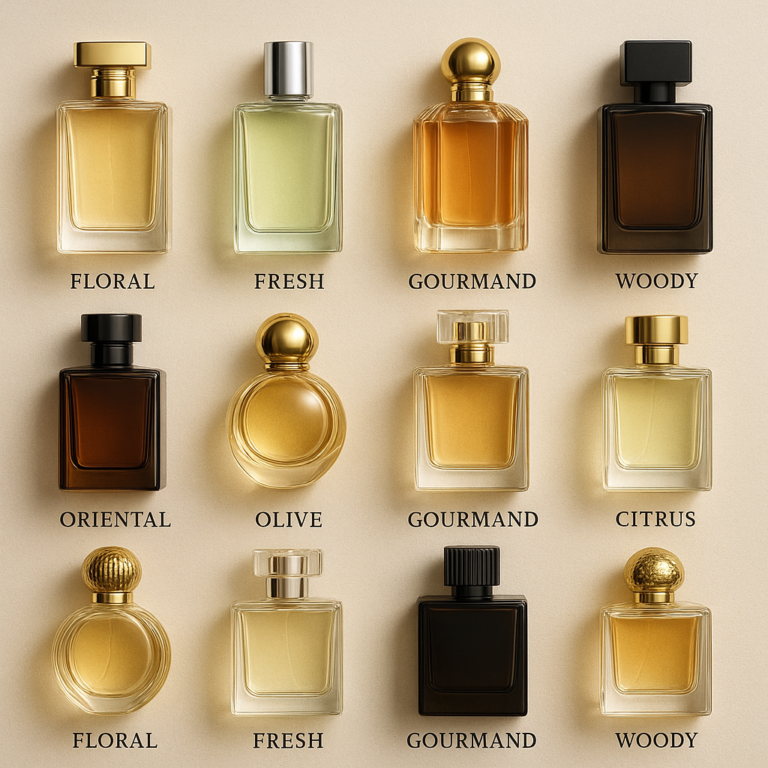
Use fragrance families as a starting map, not a set of laws. A scent can cross several categories, and your skin, climate, and personal associations all affect how it feels.
| Fragrance family | Common impressions | Examples to explore |
|---|---|---|
| Citrus and fresh | Bright, crisp, sparkling | Goutal Eau d’Hadrien |
| Floral | Petals, green stems, powder, or creamy blossoms | Hermès Twilly d’Hermès |
| Wody | Cedar, sandalwood, dry woods, soft warmth | Escentric Molecules Molecule 01 |
| Amber and resinous | Warm, balsamic, sweet, smoky | Serge Lutens Ambre Sultan |
| Gourmand | Coffee, vanilla, chocolate, pastry-like sweetness | Akro Awake or Bake |
| Oud and leather | Dark woods, animalic facets, smoke, texture | Mizensir Perfect Oud |
| Incense and spice | Aromatic, mineral, smoky, or ceremonial | Tauer L’Air du Désert Marocain |
The International Fragrance Association provides background on fragrance ingredients and the industry. For consumers, the practical lesson is simple: the ingredient list or note pyramid is not a precise recipe. It describes impressions, not a complete formula.
🛍️ How to Choose a Perfumer-Led Fragrance Brand
A step-by-step way to find your match
-
Decide what you want the fragrance to do.
A discreet office scent, a dramatic evening fragrance, and a cozy weekend perfume are different assignments. -
Choose a style, not just a famous name.
Start with a family you enjoy: fresh citrus, powdery floral, dry woods, gourmand sweetness, or smoky resins. -
Check the creator and brand relationship.
Ask whether the person founded the house, composed the fragrance, or guided its creative direction. -
Test on a bloter, then on skin.
The bloter gives you an initial impression. Skin wear shows how the fragrance develops with your body and daily surroundings. -
Give it time.
Smell again after about 20 minutes, then later in the day. Your first impression is not the whole performance. -
Test in your real routine.
Try a sample at work, outdoors, or on a warm day. A scent that feels beautiful in a quiet shop may behave differently in heat or a crowded train. -
Buy only when you want to wear it.
Don’t collect a bottle just because a perfumer’s name is famous. Your shelf is not a museum of other people’s opinions.
For more ideas, browse men’s perfumes and classic scents; scent is not restricted by gender labels, so choose by how it smells on you.
💡 Sampling, Wearing, and Collecting Perfumer-Created Perfumes
How we recommend testing
- Apply one or two sprays at first. You can add more; you can’t politely un-spray a room.
- Avoid rubbing your wrists together, which can change how the scent spreads and develops.
- Compare fragrances on separate days when possible. Smelling five strong perfumes in a row is a fast route to a confused nose.
- Keep notes: opening, mid-wear, drydown, projection, and how often you wanted to smell it again.
- Test in different conditions if you’re considering a warm-weather or all-day scent.
What other wearers say—and how to read it
Fragrance reviews are useful for spotting patterns: “very sweet,” “quiet projection,” “powdery,” or “excellent longevity.” They are not universal verdicts. Skin, climate, application, and personal scent sensitivity can change a fragrance’s perceived performance.
The Basenotes discussion titled “Famous Perfumers’ Own Brand fragrances don’t seem particularly well liked within the fragcomm—why?” raises a useful question about reputation and community taste. We can’t responsibly quote or summarize its comments here because the page is inaccessible to us behind a security block. More broadly, online fragrance communities may favor performance, originality, value, or collectability in different proportions. A low rating may reflect a mismatch in expectations—not proof that a perfume is poorly made.
One video featured with this article presents a list-style perspective on famous perfumers and their signature work. It names figures such as Francis Kurkdjian and Christine Nagel, then invites viewers to share their own favorite noses and scents; see the featured video. Treat its list as a conversation starter, not a definitive ranking—some details, such as a perfumer’s current employer or the attribution of a particular fragrance, should be checked against official sources.
🔎 How to Find Out Who Created a Perfume
A little detective work can tell you whether a fragrance is genuinely associated with a particular perfumer.
-
Check the official product page.
Search the brand’s fragrance page, press materials, or product packaging for the perfumer credit. -
Look for a reliable fragrance database.
Use reputable databases as a cross-check, especially when a brand does not publish credits clearly. -
Confirm the exact fragrance and concentration.
A flanker’s creator may differ from the original, and a reformulation or later release may have different credits. -
Distinguish attribution from ownership.
“Created by” means the perfumer composed the fragrance; it does not mean they own or founded the company. -
Check dates for current roles.
In-house appointments change. A profile written years ago may accurately describe the past but not the present.
For industry background, IFRA explains the fragrance sector, while individual brand sites remain the best source for current products and official brand histories.
✨ Recommended Perfumer Brands by Fragrance Style
| If you like… | Start with… | Why it may appeal |
|---|---|---|
| A luminous, polished signature scent | Maison Francis Kurkdjian | A wide range, from airy fresh scents to rich, sweet statement fragrances |
| Perfumer credits and artistic variety | Editions de Parfums Frédéric Malle | Named creators and noticeably different creative voices |
| Bold luxury and storytelling | By Kilian | Dramatic concepts and expressive, often intense scents |
| Minimalist woods and molecule-led scents | Escentric Molecules | A pared-back approach with a modern, skin-like feel |
| Independent, distinctive compositions | Tauer Perfumes | Memorable, atmospheric fragrances with a clear authorial identity |
| Gourmand cravings | Akro | Coffee, pastry, and other familiar temptations translated into perfume |
| Traditional and romantic fragrance styles | Goutal Paris | A heritage-rich house with floral, citrus, and softly expressive choices |
| A broader luxury wardrobe | Roja London | A polished range for shoppers drawn to statement-making compositions |
Our confident recommendation: pick three houses based on the styles you actually enjoy, then sample one fragrance from each. That gives you a more honest comparison than buying a bottle because a name appears on a “greatest perfumers” list.
✅ Quick Tips for Exploring Famous Perfumer Brands
- ✅ Separate the founder from the perfumer. A brand’s founder may be a creative director, business leader, or artist rather than the person who wrote every formula.
- ✅ Follow fragrance credits. The same perfumer may work across several very different houses.
- ✅ Sample before committing. Especially with intense niche, oud, amber, or gourmand fragrances.
- ✅ Trust your nose over hype. A popular fragrance is not automatically your fragrance.
- ✅ Verify current information. Use official brand pages for current appointments, collections, and product availability.
- ❌ Don’t treat note lists as recipes. They’re descriptive guides, not a complete formula.
- ❌ Don’t assume a famous name guarantees performance. Longevity and projection vary with formula, skin, climate, and application.
The fun question is not just “Who made this perfume?” It’s also: what does the fragrance become when you wear it? That answer is personal—and more useful than any ranking.