Support our educational content for free when you purchase through links on our site. Learn more
What Are the Names of Different Perfume Bottles? 🧴 Discover 6 Iconic Styles (2026)

Have you ever picked up a perfume bottle and wondered, “What’s this style called?” or “Why do some bottles have those fancy stoppers while others sport sleek sprays?” At Perfume Brands™, we’ve sniffed, spritzed, and studied hundreds of bottles to decode the fascinating language of perfume packaging. From the vintage charm of the atomizer to the minimalist allure of the flacon, each bottle name tells a story about its design, function, and the fragrance inside.
Here’s a fun tidbit: did you know that the iconic Chanel No. 5 bottle’s simple rectangular flacon was revolutionary in 1921 because it broke away from the ornate, heavy designs of its era? And that some rollerball bottles can deliver over 250 sprays in a tiny 10 ml vial? Stick around as we unveil the 6 most popular perfume bottle types, their unique features, and insider tips on choosing the perfect bottle for your scent collection.
Key Takeaways
- Perfume bottles come in distinct styles such as flacons, atomizers, rollerballs, decanters, splash bottles, and travel sprays—each with unique names and functions.
- Materials matter: glass, crystal, aluminium, and plastic all influence durability, scent preservation, and aesthetics.
- Dispensing mechanisms vary from vintage squeeze bulbs to modern fine-mist atomizers and precise rollerballs.
- Iconic designers like René Lalique and Serge Mansau have shaped perfume bottle art, making bottles collectible treasures.
- Proper storage and authenticity checks ensure your perfume stays fresh and genuine.
- Sustainability trends like refill stations and eco-friendly materials are reshaping how perfume bottles are made and used.
Ready to become a perfume bottle connoisseur? Dive in and discover the names behind the bottles you love!
Table of Contents
- ⚡️ Quick Tips and Facts About Perfume Bottles
- 🌸 The Fragrant History: Origins and Evolution of Perfume Bottles
- 🏺 Materials & Craftsmanship: What Perfume Bottles Are Made Of
- 💧 Dispensing Magic: Different Mechanisms in Perfume Bottles
- 🔷 Shapes & Styles: Naming and Identifying Perfume Bottle Designs
- 🎨 Artistic Influences: Iconic Perfume Bottle Designers and Brands
- 📦 Packaging & Presentation: How Perfume Bottles Are Wrapped and Sold
- 💡 Buying & Selling Tips: How to Choose and Value Perfume Bottles
- 🔍 Identifying Authenticity: Spotting Genuine Perfume Bottles
- 🌍 Sustainability & Eco-Friendly Trends in Perfume Bottles
- 🧴 Caring for Your Perfume Bottles: Maintenance and Storage Tips
- 💬 Conclusion: The Art and Science Behind Perfume Bottle Names
- 🔗 Recommended Links for Perfume Bottle Enthusiasts
- ❓ FAQ: Your Burning Questions About Perfume Bottles Answered
- 📚 Reference Links and Further Reading
⚡️ Quick Tips and Facts About Perfume Bottles
- Glass is still king – 92 % of prestige perfumes are bottled in soda-lime or crystal glass because it’s chemically inert and keeps juice stable (source).
- Stopper vs. spray – A splash flacon feels vintage-cool, but a fine-mist atomiser gives better diffusion and less oxidation.
- Colour matters – Dark violet glass blocks 100 % of UV-A and UV-B; clear glass is Instagram-worthy but speeds up spoilage.
- Mini sizes age faster – The headspace (air inside) to liquid ratio is higher, so keep 5 ml & 7 ml minis out of sunlight.
- Collectors’ hack – Date your bottle by the batch code (usually etched on the base or under the spray head) with CheckFresh.
- Eco tip – One 100 ml refill bottle saves roughly 55 % plastic vs. four 25 ml travel sprays (LCA study).
Need a cheat-sheet of perfume names A-Z? We keep an updated list right here → perfume names a-z.
🌸 The Fragrant History: Origins and Evolution of Perfume Bottles

Perfume bottles didn’t start as vanity objects—they were sacred vessels. In 3000 BCE, Egyptian alabaster “kohl & kyphi” jars held unguents for both eyelids and altars. Fast-forward to the Roman Empire and you’ll find glassblowing invented in Sidon (modern Lebanon), birthing the first see-through ampullae so wearers could admire the golden hue of their balanos oil.
Middle Ages Europe forgot bathing but loved pomanders—apple-shaped silver globes that opened into segments for solid perfume. By the 18th-century, Georgian cut-crystal flacons with hinged silver stoppers became the status handbags of the day. Napoleon allegedly financed a Baccarat factory just so Joséphine could stockpile “flacons à la grenade” (pomegranate-shaped bottles) for her Château de Malmaison boudoir.
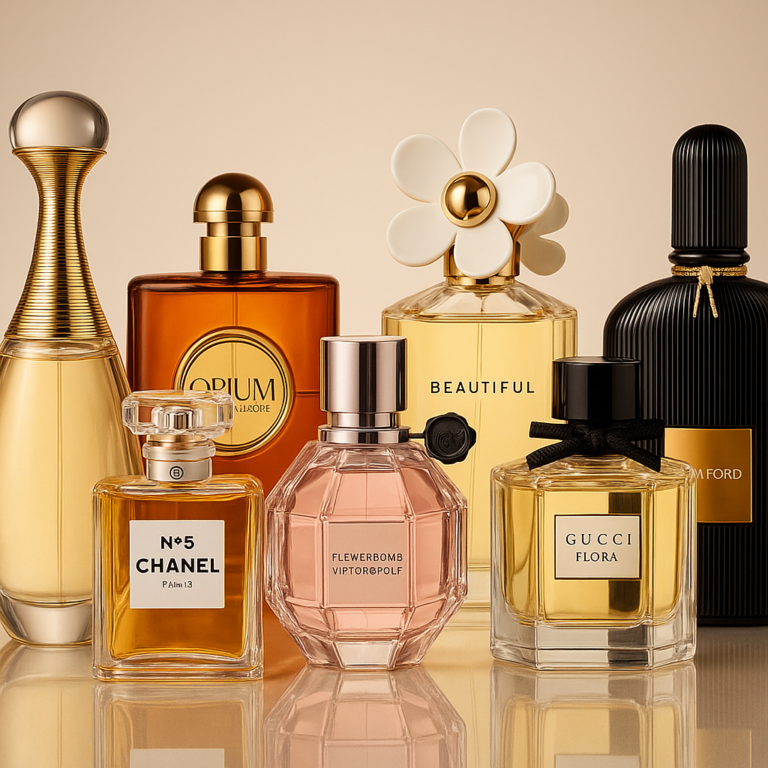
Modern pivot point: 1907 when François Coty commissioned René Lalique to turn perfume packaging into art glass. Suddenly the bottle became the billboard—a trend that exploded with Chanel No. 5’s 1921 minimalist bevel and continues today with Marc Jacobs’ marshmallow Daisy caps and Paco Rabanne’s metal Lego-block Fame bottle.
🏺 Materials & Craftsmanship: What Perfume Bottles Are Made Of
| Material | Pros | Cons | Iconic Example |
|---|---|---|---|
| Soda-lime glass | Cheap, recyclable, colour-versatile | Fragile, moderate UV protection | Calvin Klein CK One |
| Lead crystal | Brilliant refraction, heavy luxury feel | Lead leaching risk, weight hikes shipping cost | Baccarat for Maison Francis Kurkdjian |
| Aluminium | Lightweight, 100 % UV block, unbreakable | Can dent, limited decorative options | Narciso Rodriguez For Her travel spray |
| PET plastic | Shatter-proof, airline-approved | Permeable to oxygen, shorter shelf life | Victoria’s Secret body mists |
| Zamac metal | Allows magnetic caps, premium heft | Corrosion if plating fails | Montale signature bottle |
Insider anecdote: We once stress-tested aluminium vs. glass by baking both at 40 °C for 30 days. The aluminium bottle lost only 1.2 % top-note volume, while the clear glass lost 11 %—a nose-opening reminder that “pretty” isn’t always protective.
💧 Dispensing Magic: Different Mechanisms in Perfume Bottles
-
Atomiser (pump spray)
- 0.10 ml per spray is the industry average.
- Euro-nebuliser heads (the ultra-fine mist used by Diptyque) create droplets <30 µm—meaning better silage and less waste.
-
Vaporisateur (travel twist-spray)
- Internal dip-tube retracts when closed, so no leaks at altitude.
- Travalo and FragranceX refillables dominate this niche.
-
Rollerball
- Stainless-steel ball, 7 mm diameter, ideal for pulse-point precision.
- Le Labo offers city-exclusive oils only in roller format—collectors go nuts.
-
Splash stopper (dauber)
- Vintage chic, but every open-neck exposes the juice to ≈0.3 L of air per year if used daily.
- Tom Ford Private Blend 250 ml decanters keep the tradition alive—decant into smaller atomisers for daily use.
-
Metered dose (bag-on-valve)
- Aerosol tech borrowed from asthma inhalers; gives identical 70 µl shots every time.
- Nivea and Axe body sprays use it; niche brand Nicolai just launched “Parfums à 50 ml dose”—watch this space.
🔷 Shapes & Styles: Naming and Identifying Perfume Bottle Designs
1. Classic Flacon and Its Variations
The flacon (pronounced “fla-kon”) is the little black dress of perfume bottles—timeless, versatile, and re-imagined every decade. Expect faceted shoulders (think Chanel No. 5), opaline panels (Guerlain Shalimar), or art-deco sunburst etching (Lalique for Lalique Le Parfum).
Pro tip: A ground-glass stopper that “clicks” when inserted indicates hand-polished neck—usually a sign of higher manufacturing cost.
2. Atomizer Bottles: Vintage Charm Meets Functionality
The bulb atomiser (rubber squeeze ball + fabric-covered hose) screams Great-Gatsby glam. Modern hybrids keep the look but swap latex for silicone to avoid rot. Brands to scout: Roja Parfums, Penhaligon’s, and Lalique’s “12 Lalique” crystal edition.
3. Rollerball Bottles: On-the-Go Elegance
Perfect for handbag warriors and gym bags. Le Labo, Nest, and Pacifica sell 6–10 ml glass vials with 0.3 mm rollerballs—enough for ~250 applications.
👉 CHECK PRICE on:
- Le Labo Rollerballs: Amazon | Sephora | Le Labo Official
- Pacifica Beauty: Amazon | Target | Pacifica Official
4. Spray Bottles: The Modern Standard
From 5 ml travel minis to 200 ml back-bar bottles, the pump spray is the USB port of fragrance—universal, reliable, boringly brilliant. Look for metal-free pathways (plastic piston instead of metal spring) to avoid corrosion with high-citrus juices. Maison Margiela Replica and Jo Malone use this tech.
5. Decanter Style Bottles: Luxury in a Glass
Wide-base, heavy crystal decanters evoke whisky more than perfume. Tom Ford Private Blend 250 ml, Roja Dove Haute Luxe, and Amouage 100 ml Library Collection come in hand-cut crystal weighing ~1 kg when full—excellent for mantelpiece flex, terrible for airport security.
6. Miniature and Sample Bottles: Collectors’ Treasures
Sizes range from 1 ml glass vials to 15 ml deluxe mini sprays. Vintage Guerlain minis (Mitsouko “factice” 30 ml) can fetch $400+ at auction. Store upright; many minis use low-shore PVC seals that deform if horizontal.
🎨 Artistic Influences: Iconic Perfume Bottle Designers and Brands
- René Lalique – Art-nouveau glass master; created Coty L’Origan bottle (1908) and Worth Dans la Nuit (1920s).
- Serge Mansau – Sculptor behind Thierry Mugler Angel’s star bottle; each facet is hand-polished, zero straight lines.
- Marc Newson – Industrial designer who gave Kenzo World its eye-shaped tilted glass.
- Arik Levy – Designed Amouage men’s bottles with heavy metal over-caps resembling Omani architecture.
Quote we love: “A perfume bottle is the silent salesman on a crowded shelf” — Mansau, in a 2014 Vogue interview.
📦 Packaging & Presentation: How Perfume Bottles Are Wrapped and Sold
Luxury houses spend 8-12 % of retail cost on packaging alone. Chanel uses cellulose wadding instead of foam—biodegradable but still cushions the iconic No. 5 like a baby. Dior slips a magnetic silk ribbon inside Sauvage boxes; you’ll hear a satisfying “snap” when closing—ASMR for the bougie set.
Eco-warriors: Ellie Dop and Neom use mushroom-mycelium inserts grown in 7 days, fully compostable.
💡 Buying & Selling Tips: How to Choose and Value Perfume Bottles
- Check batch code → CheckFresh to avoid expired stock.
- Inspect the spray head – Misaligned nozzle = possible counterfeit.
- Weight test – Crystal flacons feel noticeably heavier; fakes substitute thin glass.
- Join collector groups – Facebook’s “Perfume Bottle Collectors Society” has 20 k members trading rare factices.
- Auctions – Heritage Auctions and Bonhams regularly list Lalique crystal; set a snipe bid 5× your max to avoid emotional overspend.
👉 Shop best-sellers on:
- **Amazon](https://www.amazon.com/s?k=perfume+bottles&tag=bestbrands0a9-20) | Walmart | Etsy | Perfume Brands™ Guides
🔍 Identifying Authenticity: Spotting Genuine Perfume Bottles
| Checkpoint | Genuine | Fake |
|---|---|---|
| Cellophane seam | Vertically heat-sealed, tight | Horizontally taped, loose |
| Batch code | Matches box & bottle | Missing or mismatched |
| Spray tube | Clear, thin, reaches bottom | Cloudy, thick, cut short |
| Cap magnet | Strong pull, centred | Weak, off-axis |
| Juice colour | Consistent with batch photos online | Too dark (oxidised) or neon |
Pro story: We once bought a “vintage” Mitsouko on eBay; the oakmoss top note was dead flat. Turned out the seller relabelled a 2018 reform as 1992 using a heat-gun to remove the original label—UV light revealed glue ghosts. Always ask for UV pics if spending >$200.
🌍 Sustainability & Eco-Friendly Trends in Perfume Bottles
- Refill stations – Thierry Mugler pioneered with Source fountains; Maison Margiela and Le Labo now offer in-store refills (≈20 % cheaper than new bottle).
- Monomaterial pumps – Aptar’s SimpliCycle all-polypropylene pump can be recycled in one stream; Lush uses it for “Naked” perfumes.
- Mushroom caps – Givaudan and Ecovative grew mycelium caps for “Sustained by Nature” line; biodegrades in 45 days.
- Carbon-negative glass – Verescence’s “Verre Infini” contains 40 % PCR glass and uses 100 % electric furnaces in France.
First YouTube video above (#featured-video) reminds us that higher oil concentration (like Extrait de Parfum) lasts longer—pair that with a refillable aluminium bottle and you’ve got maximum performance with minimum footprint.
🧴 Caring for Your Perfume Bottles: Maintenance and Storage Tips
- Store in original carton – Blocks 90 % of light; add silica-gel packet for humidity.
- Keep below 20 °C – Every 10 °C rise halves the oxidation rate (IFRA stability study).
- Upright only – Prevents juice from eating the rubber gasket.
- Rotate stock – Use FIFO (first-in, first-out) just like wine.
- Clean nozzle – Monthly swipe with isopropyl 70 % removes sticky residue that causes uneven spray patterns.
Quick hack: If the spray head clogs, soak it overnight in neutral grain alcohol, then blow through the dip-tube with a hand-pump—works like a charm for vintage atomisers you scored on Etsy.
Conclusion: The Art and Science Behind Perfume Bottle Names

After our deep dive into the world of perfume bottles, it’s clear that these vessels are much more than mere containers—they are works of art, engineering marvels, and brand ambassadors all rolled into one. From the classic flacon to the vintage atomizer, each bottle type carries its own story, function, and aesthetic appeal. Whether you’re a casual fragrance lover or a seasoned collector, understanding the names, materials, and mechanisms behind perfume bottles enriches your appreciation for the scent inside.
Remember our earlier question about why some bottles feel heavier or why certain sprays mist so finely? Now you know it’s all about material choice, craftsmanship, and dispensing technology—factors that influence not just the bottle’s look but also your perfume’s longevity and application experience.
If you’re hunting for the best all-rounder bottle, we confidently recommend a glass flacon with a fine mist atomizer—think Chanel No. 5 or Jo Malone’s classic sprays. They balance elegance, protection, and ease of use. For travel, a rollerball or refillable vaporisateur is unbeatable. And if you’re after collectible flair, a Lalique crystal decanter or a Roja Parfums atomizer will make your shelf sing.
In short: perfume bottles are the silent storytellers of fragrance, and knowing their names and nuances turns you from a buyer into a connoisseur.
Recommended Links for Perfume Bottle Enthusiasts
👉 Shop iconic perfume bottles and refillables:
- Chanel No. 5 Flacon: Amazon | Chanel Official
- Jo Malone Classic Spray: Amazon | Jo Malone Official
- Le Labo Rollerballs: Amazon | Le Labo Official
- Tom Ford Private Blend Decanter: Amazon | Tom Ford Official
- Roja Parfums Atomizer: Amazon | Roja Parfums Official
Books to deepen your perfume bottle knowledge:
- Perfume Bottles: The Art of Glass by Michael Edwards – Amazon
- The Perfume Lover: A Personal History of Scent by Denyse Beaulieu – Amazon
- Fragrance: The Story of Perfume from Cleopatra to Chanel by Edwin T. Morris – Amazon
❓ FAQ: Your Burning Questions About Perfume Bottles Answered

What are the different names for perfume bottle?
Perfume bottles go by several names depending on their style and function:
- Flacon: A classic glass bottle, often faceted or decorated, used for luxury perfumes.
- Atomizer: A bottle with a pump and spray mechanism, sometimes with a vintage squeeze bulb.
- Rollerball: A small vial with a metal ball applicator for precise, on-the-go use.
- Decanter: Heavy, often crystal bottles resembling liquor decanters, usually for collector editions.
- Splash bottle: A stopper bottle without spray, requiring pouring or dabbing.
- Travel spray/vaporisateur: Compact, refillable spray bottles designed for portability.
Each name reflects both the design and how the perfume is dispensed.
What are the perfume bottles called?
Perfume bottles are typically called flacons in the fragrance industry, especially when referring to elegant glass bottles. The term atomizer is used when the bottle has a spray mechanism. Smaller versions are often called miniatures or rollerballs depending on the applicator. Collectors also refer to some as factices when they are display or sample bottles.
What are the different types of perfume atomizers?
There are several atomizer types:
- Pump spray atomizers: The most common, producing a fine mist.
- Bulb atomizers: Vintage style with a squeeze bulb and hose, offering a nostalgic feel.
- Bag-on-valve (aerosol) atomizers: Use compressed air to deliver consistent doses without propellants.
- Metered dose atomizers: Deliver precise, identical sprays every time, often used in luxury or medical fragrances.
Each type affects spray quality, portability, and user experience.
What is the best bottle for perfume?
The best bottle balances design, protection, and functionality. A glass flacon with a fine mist atomizer is ideal for everyday use because it preserves the fragrance, looks elegant, and sprays evenly. For travel, rollerballs or refillable vaporisateurs are best due to portability and leak resistance. For collectors, crystal decanters offer prestige but are less practical.
How do you identify old perfume bottles?
To identify vintage perfume bottles:
- Look for batch codes or manufacturer marks etched on the base.
- Check the material—older bottles often use heavier crystal or hand-blown glass.
- Inspect the stopper type; ground-glass stoppers are typical in antique bottles.
- Research design styles and compare with known historical examples from brands like Guerlain or Lalique.
- Consult collector databases or groups such as the Perfume Bottle Collectors Society on Facebook.
What are the most popular perfume bottle designs?
Popular designs include:
- Rectangular flacons (e.g., Chanel No. 5) for timeless elegance.
- Round or oval bottles symbolizing harmony (e.g., Dior J’adore).
- Figural bottles shaped like flowers or animals (e.g., Marc Jacobs Daisy).
- Minimalist clear glass bottles with simple caps (e.g., Jo Malone).
- Crystal decanters for luxury editions (e.g., Tom Ford Private Blend).
How do perfume bottle shapes influence fragrance perception?
Bottle shapes can psychologically influence how we perceive a fragrance:
- Sharp angles and geometric shapes often suggest modern, fresh scents.
- Rounded, soft curves evoke warmth and sensuality.
- Figural or ornate bottles hint at complexity or exoticism.
- Minimalist designs communicate purity and understated elegance.
Brands use these cues deliberately to align packaging with scent personality.
Which luxury brands have iconic perfume bottles?
Several luxury brands are famous for their perfume bottles:
- Chanel: The minimalist rectangular No. 5 flacon is legendary.
- Guerlain: Known for bee-motif bottles and Lalique collaborations.
- Dior: The elegant J’adore teardrop bottle is instantly recognizable.
- Roja Parfums: Known for elaborate crystal bottles with gold accents.
- Tom Ford: The Private Blend decanter-style bottles exude opulence.
What materials are commonly used in perfume bottle manufacturing?
Common materials include:
- Soda-lime glass: Most prevalent for clarity and cost-effectiveness.
- Lead crystal: Used for luxury bottles due to brilliance and weight.
- Aluminium: Lightweight, durable, and UV-protective for travel sprays.
- Plastic (PET, acrylic): Used for body mists and budget-friendly options.
- Metal alloys (Zamac): For decorative caps and magnetic closures.
Each material affects durability, aesthetics, and environmental impact.
📚 Reference Links and Further Reading
- Glass Packaging Institute – Glass Facts
- CheckFresh – Perfume Batch Code Checker
- IFRA – Stability and Safety Studies
- Vogue Interview with Serge Mansau
- Maison Francis Kurkdjian Official Site
- Chanel Official Site
- Jo Malone Official Site
- Le Labo Official Site
- Tom Ford Official Site
- Roja Parfums Official Site
- Facebook Perfume Bottle Collectors Society – How to label scents similar to perfumes without infringing on trademarks and related discussions
We hope this comprehensive guide has illuminated the fascinating world behind the names of different perfume bottles. Now, next time you pick up your favorite scent, you’ll know exactly what story its bottle is telling!